
Why Kegels Aren’t Helping Your Incontinence: What to Do Instead
Chances are that someone at some point told you to “do your Kegels”.
It sounds like a good idea. Strengthening the muscles in your pelvis, what could go wrong?
You think you are doing them right…but are you?
Also, you have been doing them and you still find yourself leaking a little bit when you sneeze…?
And you wouldn’t dare go to the trampoline park with your kids…
So are they even working?
The truth is that many women believe they are doing Kegels correctly when they are not.Beyond that, pelvic floor strength is only part of the equation when it comes to urinary incontinence.
Yes, strength is important, but staying dry and feeling good requires more than strength. It requires coordination, pressure management and flexibility as well. Considerations that Kegels don't address and, in some cases, can actually make worse.
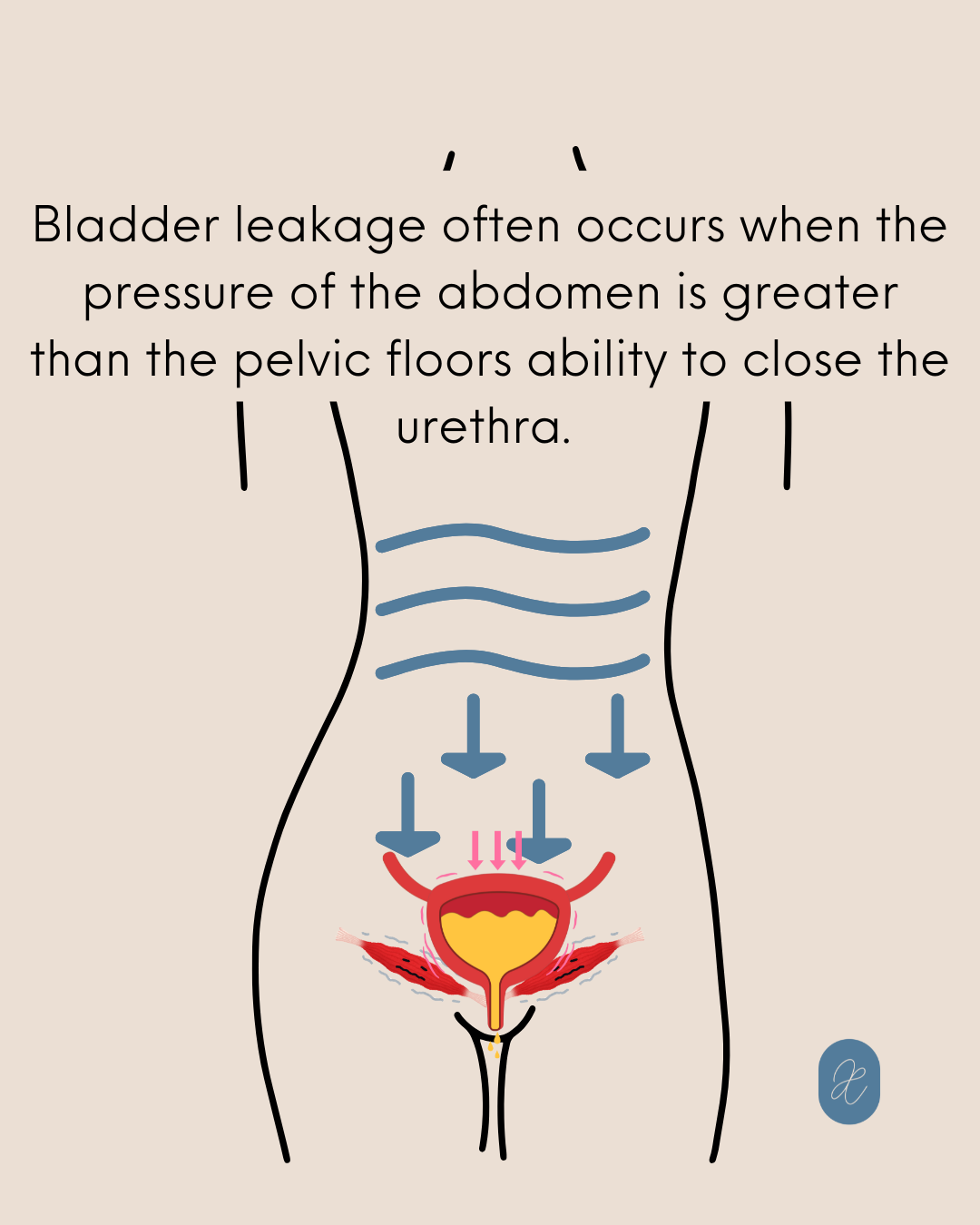
Why Are You Leaking?
Urinary incontinence, like prolapse, is often a pressure problem. Meaning that the pressure down on your bladder from your abdomen exceeds your pelvic floor's ability to maintain the closure of your urethra.
In order to fully address incontinence you need to look not just at the strength of the pelvic floor but also how your body is able to handle intraabdominal pressure.
How Do You Manage Intraabdominal Pressure?
If you remember back to physics class, pressure is force/area.
Once again this gives us two options for influencing pressure: decreasing the force, or increasing the area.
Far too often women are told to avoid forceful activity. For example, you may have been told not to lift heavy weights. There may be some wisdom in this for a short period of time but it is generally not a long term solution. In many cases it simply is not practical, even in the short term. Particularly if you have small children that are heavier than the weight you are not supposed to lift!
Additionally,the highest pressure activities that we often encounter are biological functions such as sneezing and coughing, which are not things you can simply “give up.”
Apart from avoiding high pressure activities, your breath is the best way in which you can decrease force. As you inhale and fill your lungs, you are increasing your intraabdominal pressure, as you exhale you are decreasing it.
One of the things that you can do to help manage your intraabdominal pressure during the day is to pair forceful activities with an exhale.
Sometimes this is conscious, but often, it should be subconscious.
If you are lifting something heavy, whether it be a weight at the gym or your child, you can exhale consciously.
When you cough, sneeze or laugh your body should exhale automatically. Ideally this exhale is coordinated with a lift of your pelvic floor and the contraction of your deep abdominals.
Both the conscious strategy and the unconscious coordination allow your body to handle increased forces without increased pressure on your pelvic organs.
360 Breathing to Help With Urinary Incontinence
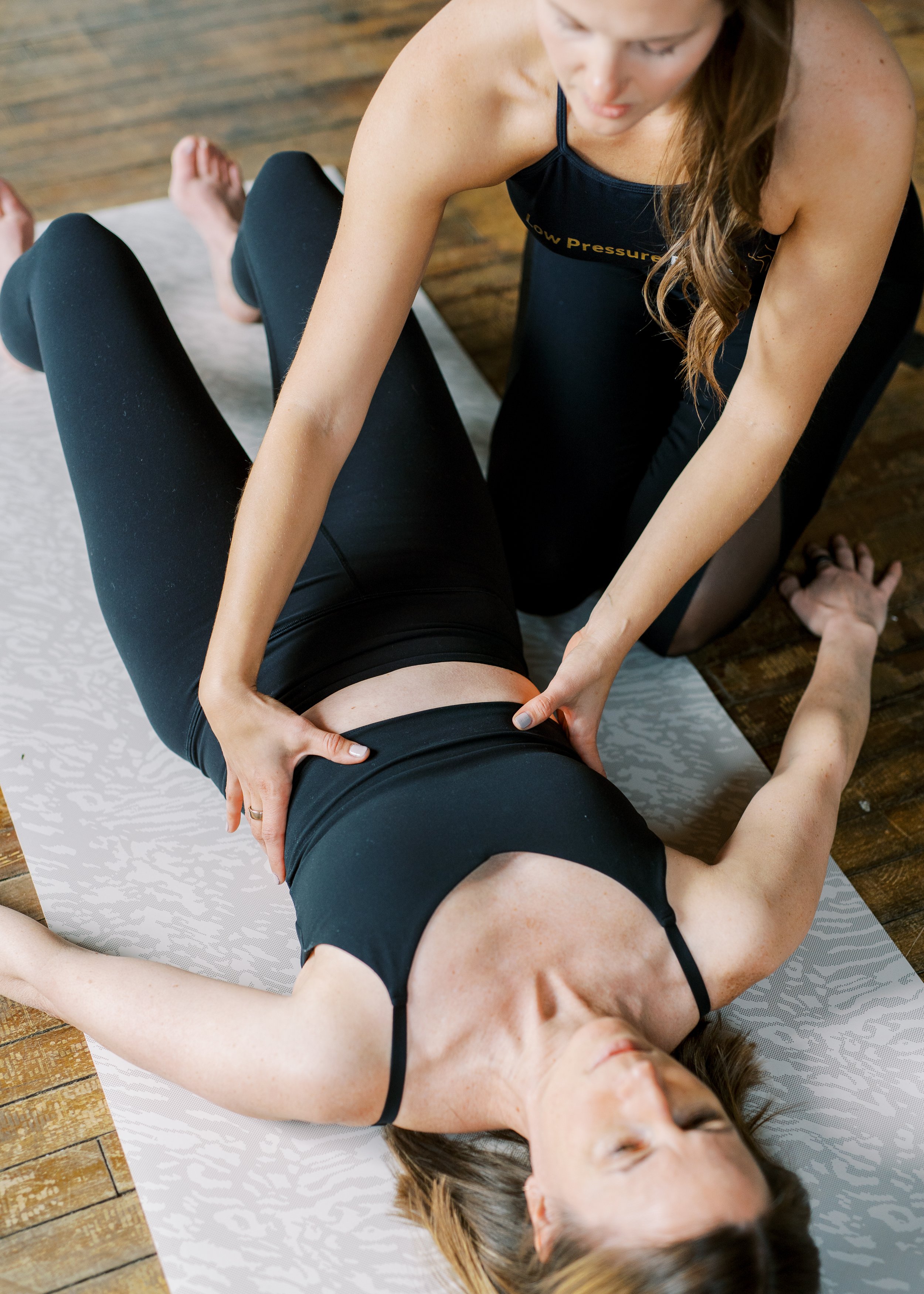
To help increase the area, and therefore decrease the pressure, you can train your body to utilize ribcage opening during your inhales.
As you inhale the pressure in your abdomen increases. However if you increase the space by opening your ribcage you can help to decrease this pressure. It may be a small difference, but you breathe over 20,000 times a day, and that small change in pressure can make a big difference in your urinary incontinence symptoms.
In summary, to decrease the pressure that you encounter during the day you can:
leverage your breath by exhaling
optimize the coordination of your pelvic floor and diaphragm
increase the area by opening your ribcage.
Pelvic Floor Flexibility
Managing pressure is important when it comes to managing incontinence.
However, even with the best pressure management there are times during which your body will have to handle higher amounts of pressure.In order to do this your pelvic floor doesn’t just need to be strong, it also needs to be responsive and coordinated.
Holding a sustained contraction, or doing many repeated contractions, may increase tension and strength, but it sometimes also promotes rigidity.
In order for your pelvic floor to be responsive, it needs to be flexible.
In order to fully understand this, just, for a moment, imagine your bladder is like a water balloon.
Picture dropping a water balloon onto a surface. In order for the balloon not to break, the surface needs to be able to absorb some of the force. If you dropped the balloon onto a hard, rigid surface it would break, or leak if you will. If the surface that you dropped it on was flexible and could help absorb the force, it would stay dry.
Our pelvic floor is shaped like a hammock and should act in a similar fashion, being able to absorb some downward force. When the muscles are able to absorb some of the force it is like your bladder landing on a soft surface as opposed to a hard surface. It helps prevent bladder leaking. The key is encouraging both the strength to maintain the organ position AND the flexibility to help manage the force.
Our breath can help assure our pelvic floors flexibility.
Our diaphragm and our pelvic floor should move in sync with pelvic floor excursion often mirroring diaphragm excursion. As our diaphragm lowers with our inhales, it encourages our pelvic floor to lengthen downward, or relax.
However, it is typical for us to not use our entire diaphragm range of motion. When this happens it tends to discourage full pelvic floor range of motion. This decreased range of motion can happen due to stress or due to high muscle tone in the abdomen. When our diaphragm only moves in a limited range for a period of time it can also become tight and loose its ability to move fully. This is again mirrored in the pelvic floor.

In order to restore the length of our pelvic floor we can start by restoring the length of our diaphragm.
This can be done both by manually loosening the diaphragm and by restoring a full 360 breath pattern as mentioned above.
Pelvic Floor Coordination
Restoring the connection between the diaphragm and the pelvic floor also helps facilitate coordination.
As I mentioned above, there are times, like when you sneeze or laugh in which your body typically performs a forceful exhale. This forceful exhale should be paired with a contraction of your pelvic floor and the co-activation of your lower abdominals.
Activation of these muscle groups helps to meet the downward pressure with an upward force and helps to decrease the effects of the pressure on the pelvic organs.
You can practice this voluntarily with a maneuver known as the “knack” where you practice holding a pelvic floor contraction against a cough. I do believe this is a beneficial tool.
However, I also love training your body to do this involuntarily by ensuring that the diaphragm and pelvic floor connection is strong. After all, the last thing you need to think about while laughing, sneezing or vomiting is to contract your pelvic floor. Train your body to respond naturally, and let it leave your mind.

Low Pressure Fitness: An Alternative to Kegels
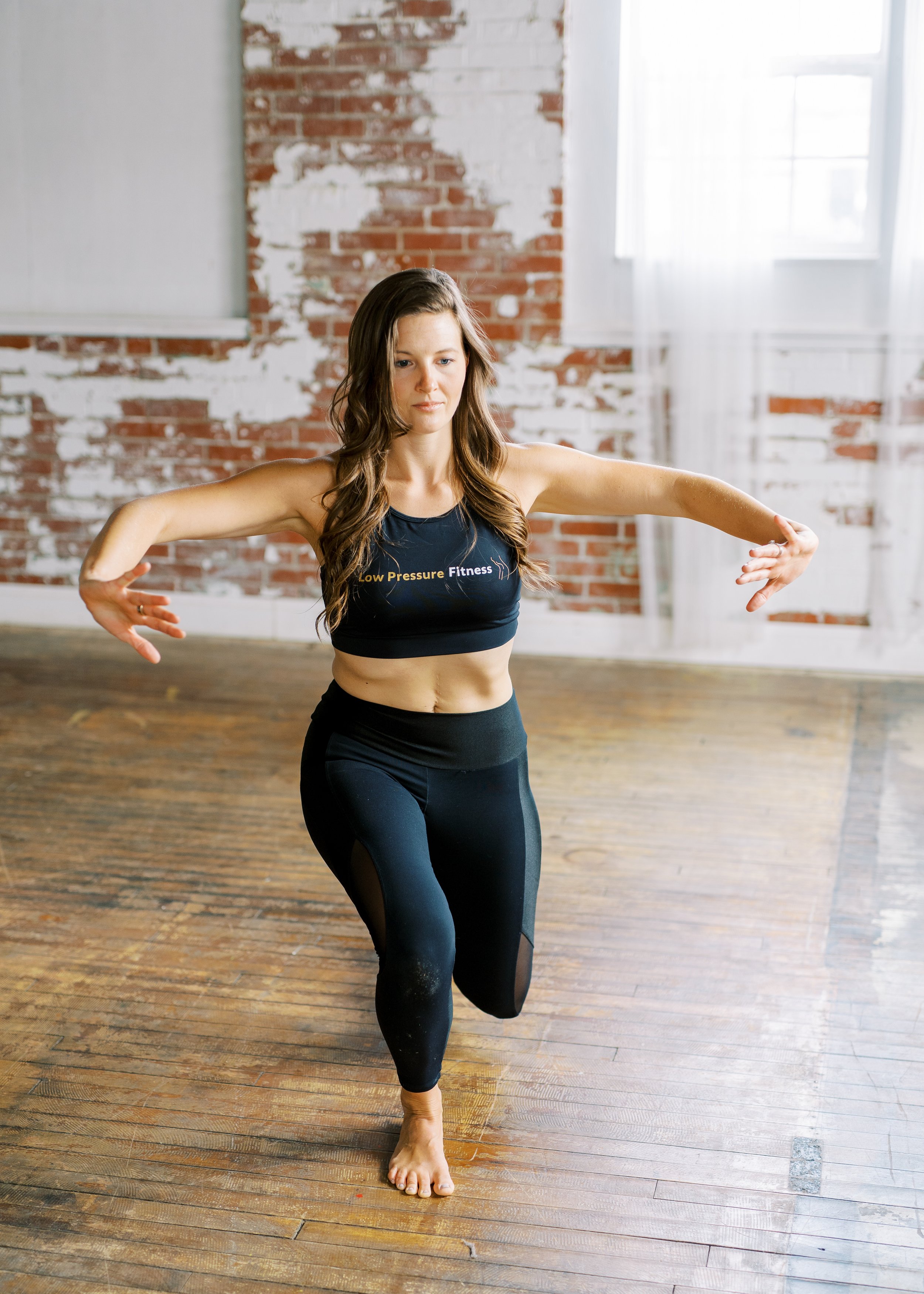
So what is the best way to strengthen your pelvic floor, while teaching your body to manage pressure well AND encouraging flexibility and coordination?
Obviously your breath is key, but just practicing diaphragmatic breathing can be limiting, and a bit boring.
Low Pressure Fitness is a movement system that addresses all of these factors.
You can read more about the system here. However it was specially designed to help your body learn to manage pressure and is excellent at facilitating involuntary coordination of the pelvic floor. It trains your pelvic floor to be strong and responsive while maintaining flexibility.
How to Get Started With Low Pressure Fitness
Ready to give it a try?
I have several options for getting started with Low Pressure Fitness, including my self paced courses Core Shift,andIGNITE, live zoom classes or private sessions.
I hope to see you in class soon.
