What Is Low Pressure Fitness? Benefits, Hypopressives & How It Works
How is it different from hypopressive exercises?
What are the benefits?
And should you be doing it?!?
These are some of the questions that may come to mind when you first start hearing about Low Pressure Fitness. I am going to answer these questions and more in this blog.
What are Hypopressive Exercises?
Let’s start with what hypopressive exercises are. A hypopressive maneuver is a breath holding maneuver where you open your ribcage after an exhale. It is called a hypopressive because it can create low (hypo) pressure in the abdomen.
This maneuver has its own set of benefits. I often tell my clients it is like a facelift for your organs. When you open your ribcage you are applying an upward, traction-like force to your organs and all of their associated connective tissue. This mobilization can be especially beneficial after abdominal or pelvic surgery to address scar tissue.
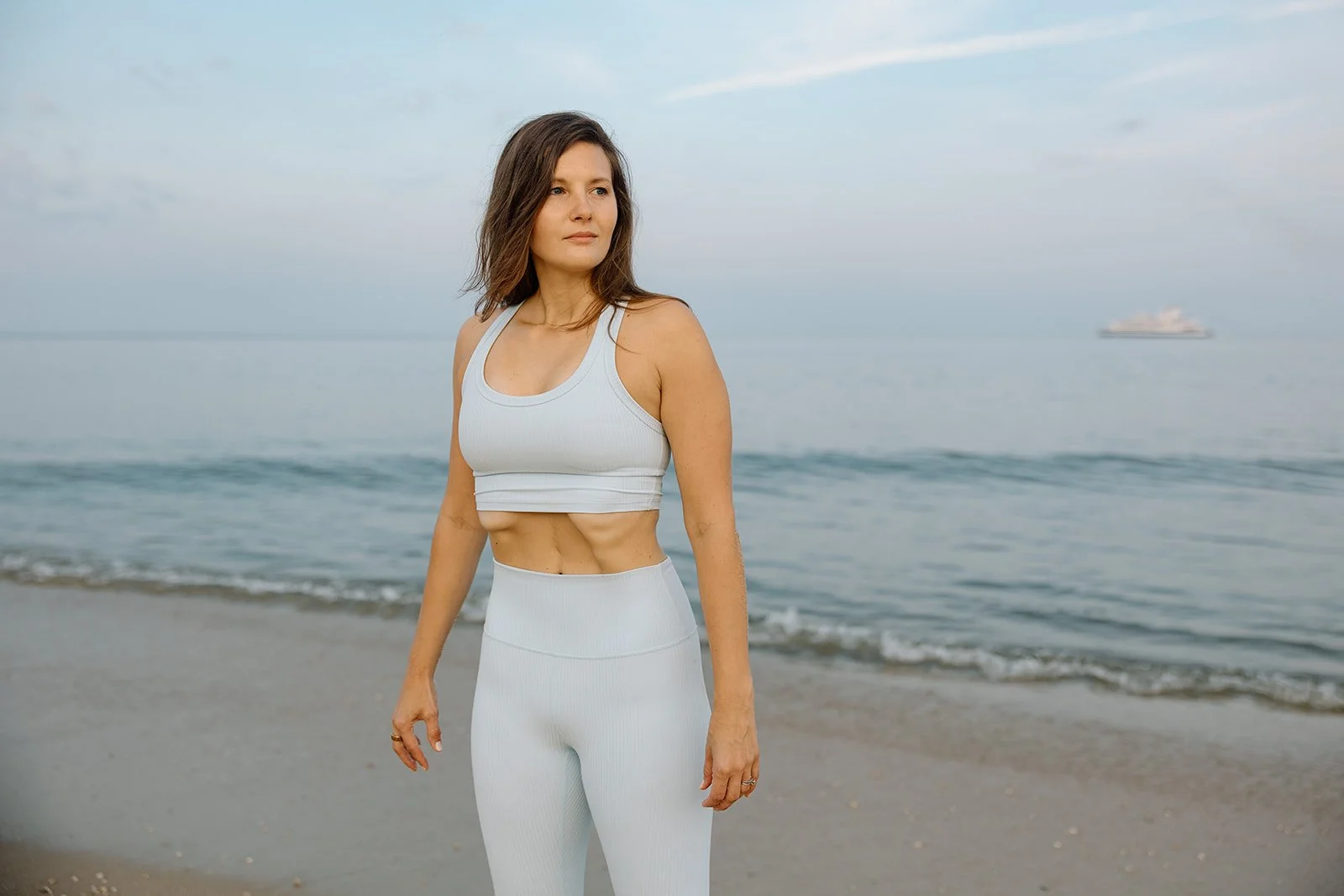
Demonstration of the hypopressive maneuver.
Additionally, the hypopressive itself can help strengthen diaphragm and pelvic floor coordination. It also facilities a lifting activation within your pelvic floor and activation of the deep abdominal muscles.
What is Low Pressure Fitness?
Low Pressure Fitness is a movement system that combines hypopressive exercises with both lateral 360 breathing and very intentional postural positioning.
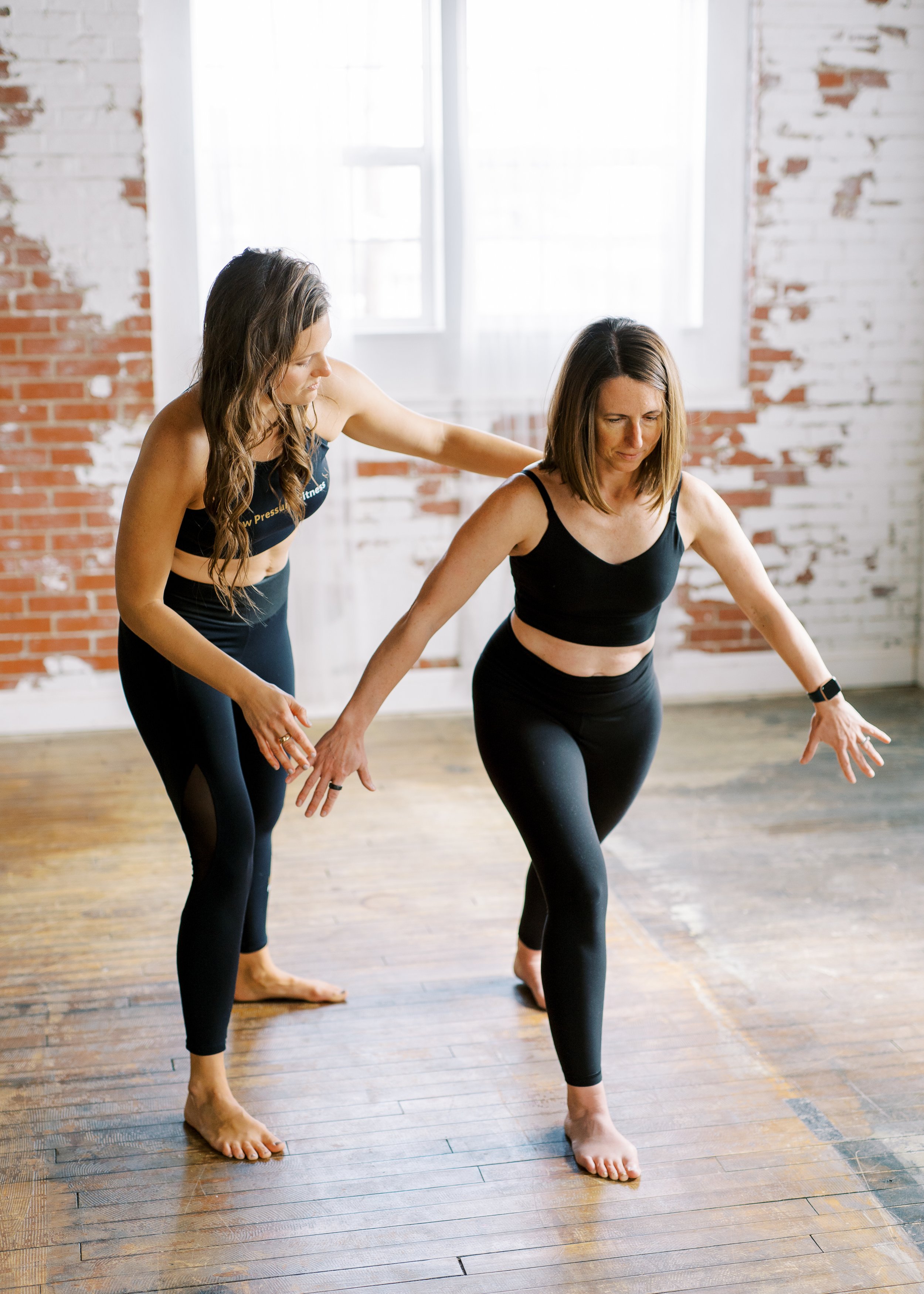
The system was founded in Spain in 2014 by Dr. Tamara Rial and Piti Pansach. My understanding of its origins were that Dr. Rial had been studying the effectiveness of hypopressive exercises and found them to be beneficial in a postpartum population. Piti is a personal trainer and took issue with the traditional core training methods that often result in injury due to high intraabdominal pressure generation.
I have not personally met Piti. I have been fortunate enough to have done my instructor training with Dr. Rial and can attest that she is an actual genius. The layers of intention and thought that she has integrated into Low Pressure Fitness constantly impresses me.
Low Pressure Fitness Verses Hypopressive Exercise
Low Pressure Fitness utilizes a hypopressive maneuver, but it is so much more than hypopressives.
As I mentioned earlier, Low Pressure Fitness also includes a lateral rest breath component and postural positioning in addition to the hypoopressive maneuver.
The rest breath component may seem basic. However, I have found that many women really need this part of the practice. So many of us have dysfunctional breath patterns. I am often asked why this is the case. My suspicion is that stress is the primary culprit.
Stressful periods of life often result in short shallow breathing. This short shallow breathing can cause our diaphragm to shorten. When we have a shortened diaphragm we continue to only take short shallow breaths long after the stressful event is over.
A shallow breath pattern can perpetuate anxiety, cause the pelvic floor to shorten, and restrict optimal core function.
The antidote we are often given for this adaptation is belly breathing. However, forcing air into our lower abdomen can actually increase intraabdominal pressure and inhibit deep abdominal function.
This deep breath pattern may be okay during a seated breath work practice, but is not practical or helpful during daily activity.
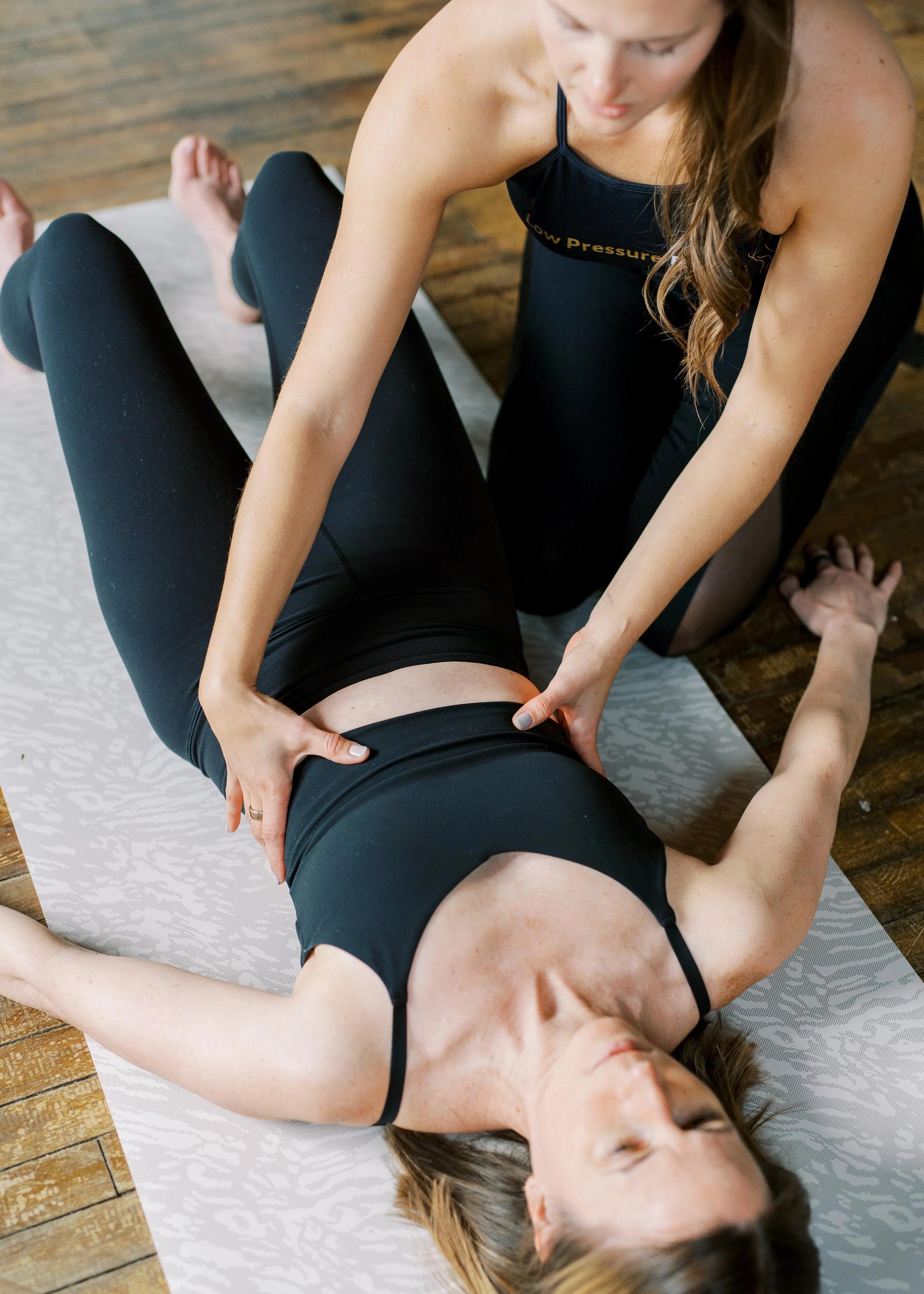
Intentionally using a lateral or 360 breath pattern helps to fully restore diaphragm mobility, encourages diaphragm and pelvic floor coordination and decreases intraabdominal pressure. It also aids in postural strengthening.
Mastering the lateral breath component is integral in performing the hypopressive maneuver well. I have seen (mostly on social media, or from clients who initially tried to learn from youtube) that when you jump right into trying to do the hypopressive maneuver, without first mastering lateral breathing, you oftentimes end up doing the hypopressive maneuver wrong.
Generally, clients end up over activating their abdominals to compensate for their inability to move the ribcage. This compensation can actually result in increased intraabdominal pressure and could hurt your cause. Trust me, don’t skip the lateral breathing.
Low Pressure Fitness Poses
The thing that really differentiates Low Pressure Fitness from general hypopressive exercises are the postures.
Low Pressure Fitness has a series of postural positions in which you perform both the lateral breath pattern and the hypopressive maneuver when appropriate.
The postures are named after the goddesses of Greek mythology and designed with several layers of intention.
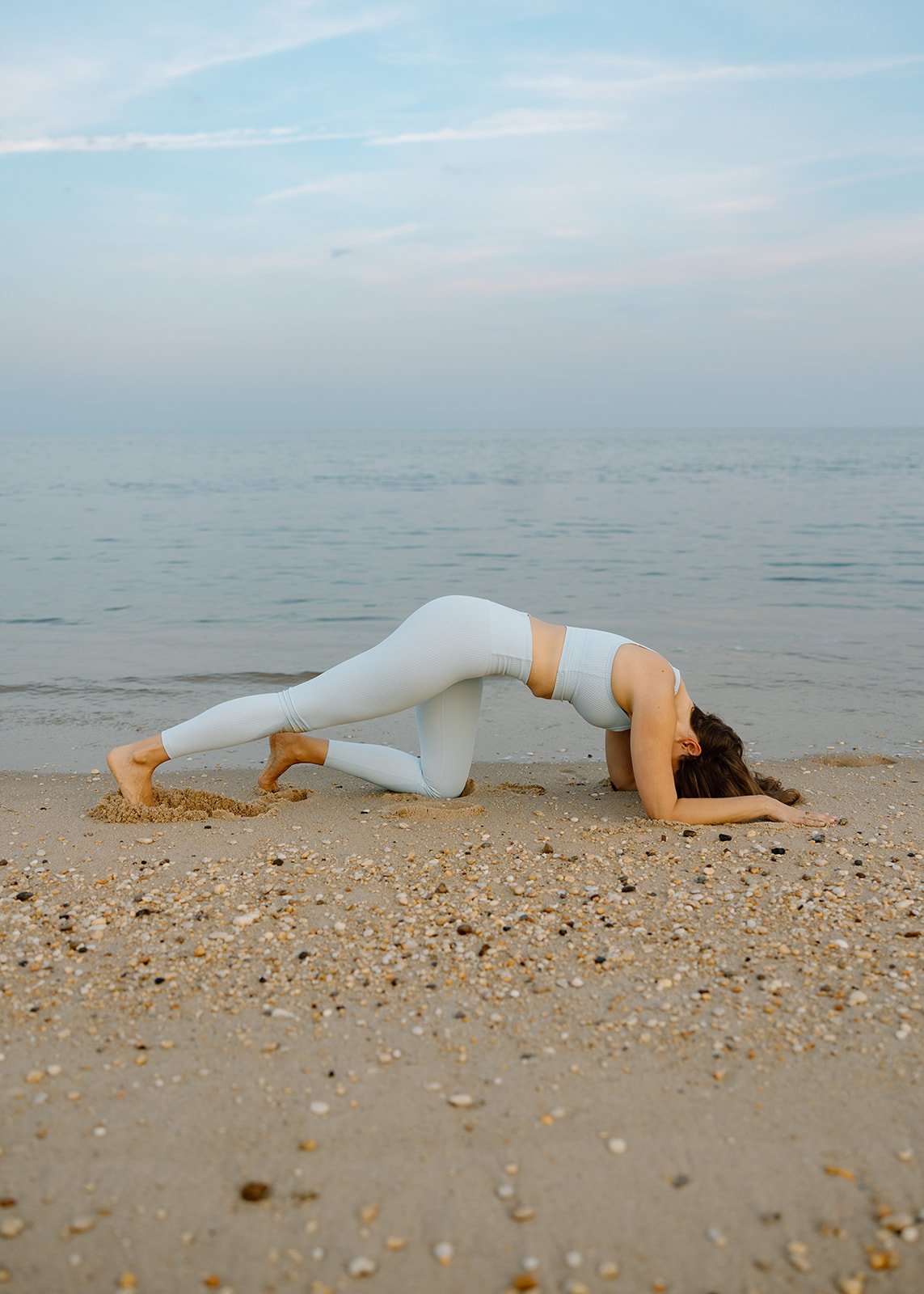
The foundation of the different postures are the different lines of fascia throughout the body. Your body is connected from head to toe through several pathways comprising both muscle and the fascia that connects them. These pathways are sometimes referred to as fascial chains. Your body is set up to function well when these pathways have optimal length and strength. The Low Pressure Fitness positions are designed to help both mobilize and strengthen these pathways.
The positions also take the nerves within your body into account. The arm positions are designed to help mobilize the 3 major nerves in your upper limbs. I personally found relief from thoracic outlet syndrome and cubital tunnel thanks to Low Pressure Fitness.
Additionally, the positions take energetics and emotions into consideration. The goddess archetypes are paired with positions that embody the feelings of that archetype. An excellent Low Pressure Fitness instructor can build a flow based on both your physical and emotional needs.
The Benefits of Low Pressure Fitness
There are many benefits of Low Pressure Fitness.
The benefits presented in the instructor training based on the medical literature include:
decreasing stress incontinence
decreasing inter-recti distance for diastasis recti
improving the tension of the linea alba for diastasis recti
the prevention of hernia
decreasing pelvic organ prolapse symptoms
postural improvement
decreasing lumbar pain
decreasing abdominal pain
decreasing constipation
reducing pain during menstruation
improving venous return
decreasing waist circumference
increasing hamstring extensibility
improving hematological values
I would argue that just about anyone could derive SOME benefit from this practice. However, for some people the benefits would be similar to those of other exercise programs. So in this section I would like to highlight several groups for which I believe the benefits are unmatched.
Low Pressure Fitness for Pelvic Organ Prolapse
I would argue that every woman who has a pelvic organ prolapse would benefit from utilizing Low Pressure Fitness as part of her management plan.
I would also argue that no other exercise system is able to influence a pelvic organ prolapse like Low Pressure Fitness can.
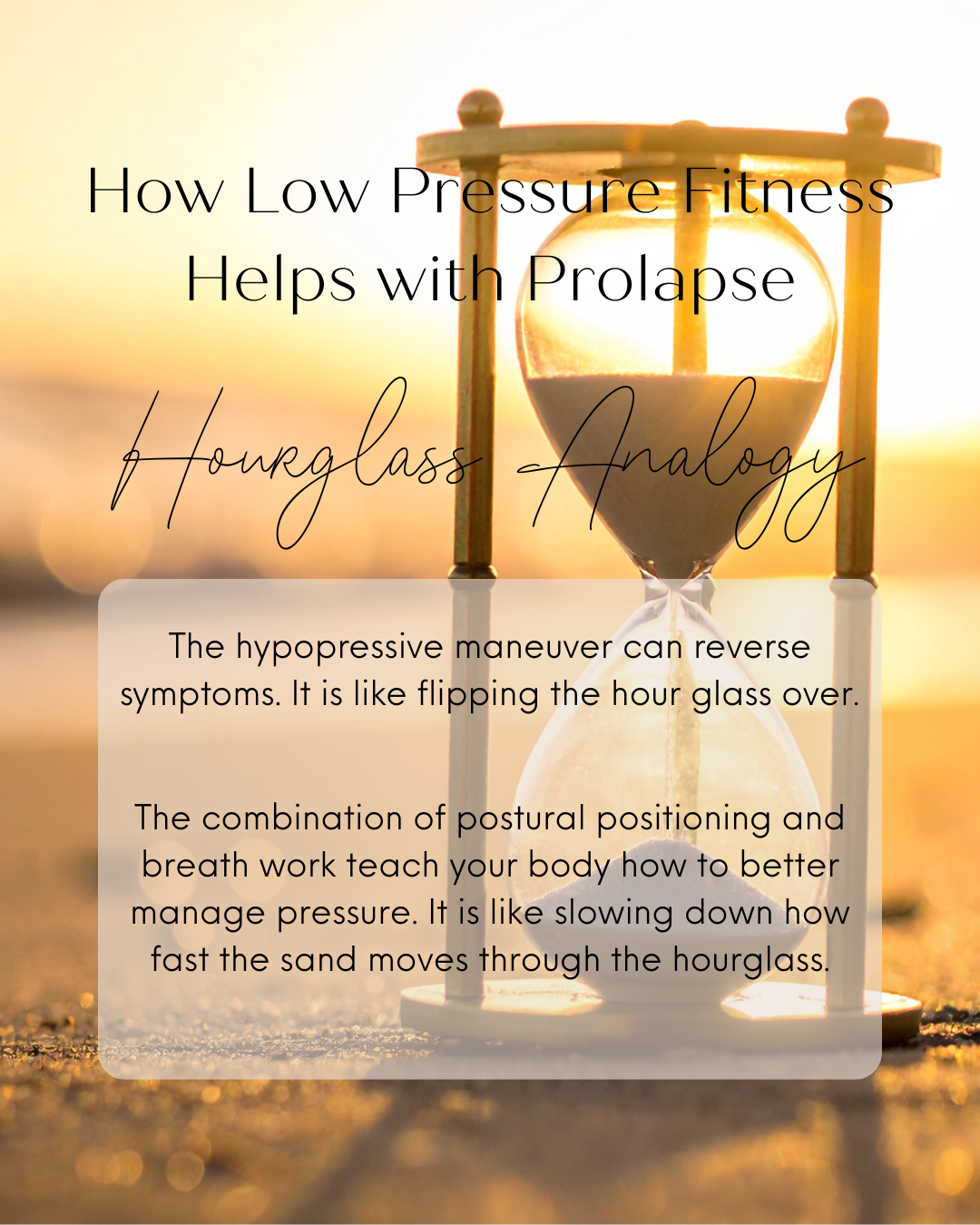
Low Pressure Fitness works to influence prolapse in two ways. One is immediate with moderately lasting effects. The other takes a little bit of time, but is more long lasting. I like to use the analogy of an hourglass to help fully understand the mechanisms of action.
If you have a pelvic organ prolapse you probably notice your symptoms more at the end of the day. I like to think of your prolapse symptoms like the sand in an hour glass, gradually building as the day goes on.
The hypopressive maneuver itself produces an elevation of the pelvic organs. I have seen, both in my own body and in clients, the reduction of pelvic prolapse through the active motion of the hypopressive maneuver. It has the potential to provide immediate relief.
In the hourglass analogy, doing hypopressive exercises equivalent to flipping the hourglass upside down. It has the ability to immediately reduce your symptoms. Almost like a reset. However,if you ONLY did the hypopressive maneuver and you did not address how your body handles pressure, you would only achieve temporary relief and your symptoms would continue to return at a similar rate.
The second part of why Low Pressure Fitness is so wonderful for prolapse comes from the other two components of the practice: the rest breaths and the postural positions.
When you change and strengthen your breath pattern into lateral breathing you are allowing your body to manage life's everyday tasks with just a little less intraabdominal pressure. The same can be said of the postural positions. You are also decreasing your body's intraabdominal pressure when you create more space in your abdomen by sustaining an elongated posture.
In the hourglass analogy this is equivalent to slowing the speed at which the sand moves through the hourglass.
I will admit that the second part of this can be taught in other ways. However, from what I have observed, it is often through an overwhelming amount of disconnected exercises. Low Pressure Fitness provides a wonderfully coherent method to address prolapse. Plus you get all of the other benefits!
Hypopressive Exercises for Abdominal Surgery Recovery

Although not listed in the above benefits, this may be the benefit I am most passionate about. I came to Low Pressure Fitness through my own personal recovery from abdominal surgery.
I genuinely feel like patients are seriously under treated following abdominal surgery.
Typically if you undergo abdominal surgery the focus of the surgery is the organ being addressed. However, your organs are protected by layers of muscle and connective tissue. In order to access the organs you need to cut through and alter these layers.
Muscles tend to be inhibited after they are cut through. It is likely that your abs will not work very well automatically after surgery. Your fascia can also be scarred down. This scarring will not just affect your abdominal muscles but has the potential to influence any muscle that shares the fascial chain with the abdomen. I have seen shoulder, hip and neck dysfunction that improved following the release of abdominal scar tissue.
Additionally, decreased movements within the organs themselves can slow gut motility and can influence gut health. Any time gut health is affected it can have vast consequences on overall health.
The hypopressive maneuver encourages mobility of the fascial layers within the abdomen that connect both the muscles and the organs. I personally found significant relief with hypopressives after abdominal surgery. I would highly encourage anyone who has had their abdomen cut through, even laparoscopically, to explore hypopressives.
What Questions Do You Have about Low Pressure Fitness?
I would love to answer them in a future blog post. Send your questions to info@jennacornelldpt.com.
I also always leave time for questions during my live virtual classes.If you are new to the practice I recommend signing up for my next “Intro to Breath” Class.

Getting Started with Low Pressure Fitness
In addition to live classes, I also offer two comprehensive courses to help you get started: Core Shift and IGNITE. I also offer several Membership options.
I hope to see you in class soon!
-Jenna