Best Exercises for Pelvic Organ Prolapse: Low Pressure Fitness Hypopressives
So you have been told you have a pelvic organ prolapse (POP).
If you are like most women, learning this has caused you to freak out a little bit, google vigorously, and then probably freak out some more. Maybe you have been told by your OBGYN that you need surgery, or worse, there is nothing you can do.

However, you don’t like either of those options and you are determined to find a different way.
I am so glad you are here. Because there is a different way.I personally have “recovered” from POP and I love helping women feel empowered to be absolutely in control over their prolapse.
What is Pelvic Organ Prolapse?
A prolapse simply means that a body part has moved downward from where it should be. In the case of your pelvic organs, they should be cozy up inside the pelvis supported by connective tissue and the pelvic floor. However, sometimes they slip down into the vaginal canal becoming visible at the vaginal opening. In more severe cases the organs can actually slip out of the vaginal canal.
Why Pelvic Organ Prolapse Happens
Prolapse is a pressure problem.
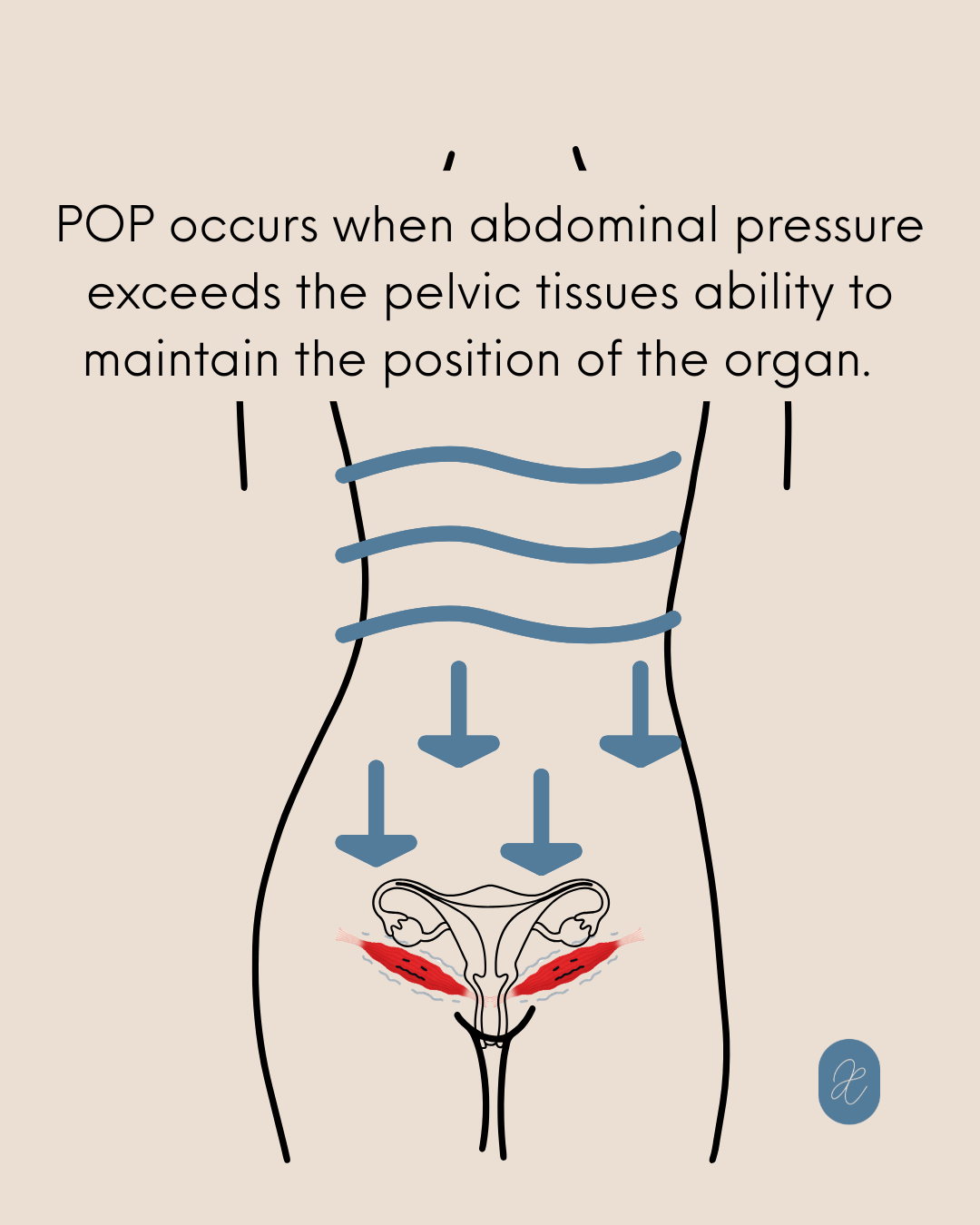
Prolapse happens when the pressure coming downward from your abdomen exceeds the ability of your pelvic floor and ligaments to maintain the position of the organ.
Risk factors for prolapse include childbirth and hyper-mobility along with consistently participating in activities that generate high abdominal pressure such as heavy lifting.
Antidotally I would also argue that being “type A” or undergoing a very stressful event can also place you at risk for prolapse. If you tend to hold a lot of tension in your jaw or shoulders, you also are likely holding a lot of tension in your abdomen and pelvic floor. When you hold a lot of tension in your abdomen and pelvic floor it typically alters your body's ability to respond to intraabdominal pressure. When you don’t respond well to pressure, you sometimes develop a prolapse.
Despite it not being talked about enough, pelvic organ prolapse is incredibly common, especially following vaginal delivery. For some women (likely those who manage their pressure well) the prolapse symptoms resolve on its own. For others, it requires intention, but resolution is possible!
How to Reverse Pelvic Organ Prolapse
As I mentioned earlier, pelvic organ prolapse happens when your abdominal pressure exceeds your pelvic floor's ability to handle that pressure.
When you address pelvic organ prolapse you have two options-
Decrease the intraabdominal pressure, or how your body is able to coordinate to handle that pressure
Strengthen the pelvic floor and optimize supporting tissues.
I believe there was a period of time in which rehab for pelvic organ prolapse focused primarily on strengthening of the tissue. I will also say that the introductory courses for pelvic floor PT’s do not do a wonderful job of equipping clinicians to help clients optimize pressure management.
In general, the pelvic floor physical therapy community is increasingly discussing how to alter abdominal pressure, but some clinicians still have not mastered it. So if you attended pelvic floor physical therapy with limited results please know there is still hope for you.
How To Manage Everyday Pressure
If you remember back to physics class, pressure is force/area.
Once again this gives us two options for influencing pressure: decreasing the force, or increasing the area.
Far too often women are told to avoid forceful activity. For example, you may have been told not to lift heavy weights. There may be some wisdom in this for a short period of time but it is generally not a long time solution. In many cases it is simply not practical, even in the short term. Particularly if you have small children that are heavier than the weight you are not supposed to lift.
Additionally, the highest pressure activities that we often encounter are biological functions such as sneezing and coughing, which are not things you can simply “give up.”
Apart from avoiding high pressure activities, your breath is the best way in which you can decrease force. As you inhale and fill your lungs, you are increasing your intraabdominal pressure, as you exhale you are decreasing it.
One of the things that you can do to help manage your intraabdominal pressure during the day is to pair forceful activities with an exhale. Sometimes this is conscious, but often, it should be subconscious.
If you are lifting something heavy, whether it be a weight at the gym or your child, you can exhale consciously.
When you cough, sneeze or laugh your body should exhale automatically. Ideally this exhale is coordinated with a lift of your pelvic floor and the contraction of your deep abdominals.
Both the conscious strategy and the unconscious coordination allow your body to handle increased forces without increased pressure on your pelvic organs.
360 Breathing to Help Pelvic Organ Prolapse
To help increase the area, and therefore decrease the pressure, you can train your body to utilize ribcage opening during your inhales.
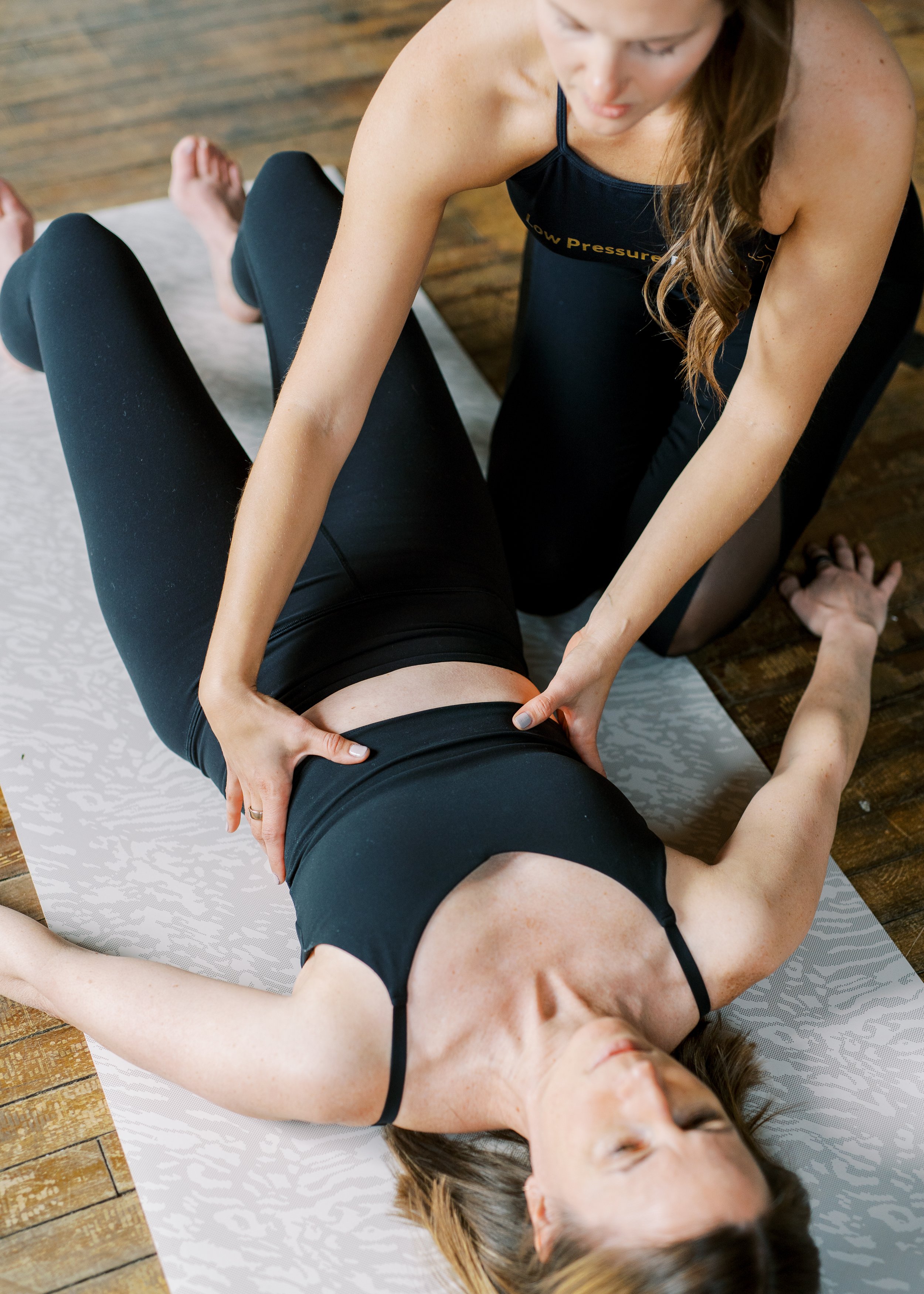
Expanding your ribcage during inhalation can help you manage everyday pressures.
As you inhale the pressure in your abdomen increases. However if you increase the space by opening your ribcage you can help to decrease this pressure. It may be a small difference, but you breathe over 20,000 times a day, and that small change in pressure can make a big difference in your prolapse symptoms.
In summery, to decrease the pressure that you encounter during the day you can:
leverage your breath by exhaling
optimize the coordination of your pelvic floor and diaphragm
increase the area by opening your ribcage.
Low Pressure Fitness trains your body to employ all of these strategies.
Low Pressure Fitness Hypopressives: The Best Exercise for Pelvic Organ Prolapse
I would argue that every woman who has a pelvic organ prolapse would benefit from utilizing Low Pressure Fitness as part of her management plan.
I would also argue that no other exercise system is able to influence a pelvic organ prolapse like Low Pressure Fitness can.
Low Pressure Fitness works to influence prolapse in two ways. One is immediate with moderately lasting effects. The other takes a little bit of time, but is more long lasting. I like to use the analogy of an hourglass to help fully understand the mechanisms of action.
If you have a pelvic organ prolapse you probably notice your symptoms more at the end of the day. I like to think of your prolapse symptoms like the sand in an hour glass, gradually building as the day goes on.
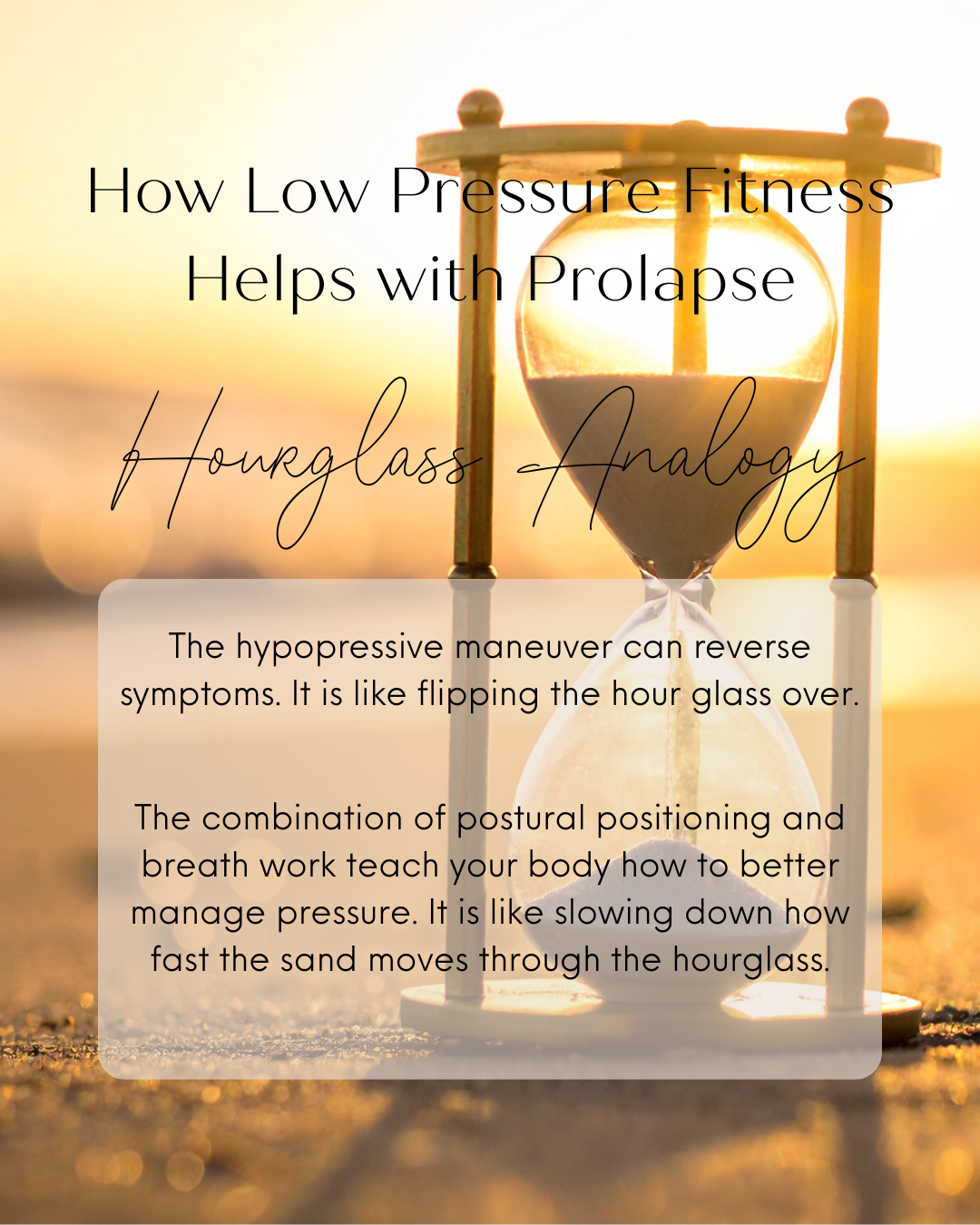
The hypopressive maneuver itself produces an elevation of the pelvic organs. I have seen, both in my own body and in clients, the reduction of pelvic prolapse through the active motion of the hypopressive maneuver. It has the potential to provide immediate relief.
In the hourglass analogy, doing hypopressive exercises equivalent to flipping the hourglass upside down. It has the ability to immediately reduce your symptoms. Almost like a reset. However, if you ONLY did the hypopressive maneuver and you did not address how your body handles pressure, you would only achieve temporary relief and your symptoms would continue to return at a similar rate.
The second part of why Low Pressure Fitness is so wonderful for prolapse comes from the other two components of the practice: the rest breaths and the postural positions.
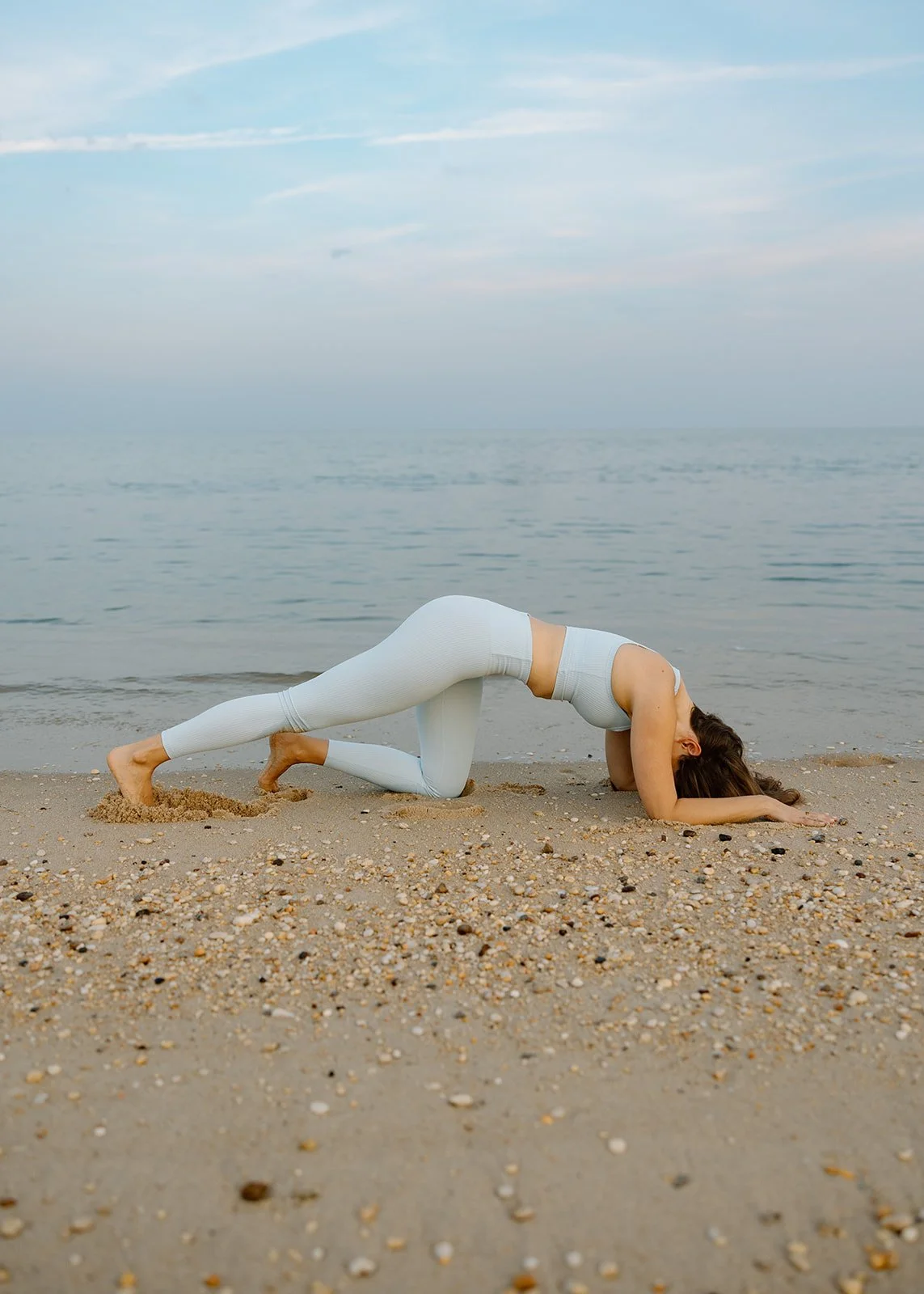
When you begin lateral breathing you are allowing your body to manage life's everyday tasks with just a little less intraabdominal pressure. The same can be said of the postural positions. You are also decreasing your body's intraabdominal pressure when you create more space in your abdomen by sustaining an elongated posture.
In the hourglass analogy this is equivalent to slowing the speed at which the sand moves through the hourglass.
I will admit that the second part of this can be taught in other ways. However, from what I have observed, it is often through an overwhelming amount of disconnected exercises. Low Pressure Fitness provides a wonderfully coherent method to address prolapse. Plus you get all of the other benefits that Low Pressure Fitness has to offer!
Prolapse Surgical Considerations
There are instances in which your supportive tissue can use a little boost or extra support. In some cases women truly benefit from the support of a pessary or surgical intervention.
A pessary can be a wonderful tool as you continue to work on your pressure management. Surgery is an option to help restore compromised tissue, but one should be aware that prolapse surgeries have a high “failure” rate.
I actually do not believe that is because the surgery is not effective. But rather, that the newly repaired tissue is often subject to the same pressures that contributed to the issue in the first place.
ACL repairs would also have a high failure rate if it weren’t for the rehab that is standard of care after surgery. Tissue that is surgically altered often needs protection, time to heal, and then needs to be optimally supported for a positive outcome.
If you fix the tissues, but continue to have poor pressure management, there will be increased stress on the repair. In that case, it is not hard to imagine why there is a high reoccurrence rate.
So do you truly need surgery? Or do you just need to fix your pressure management? It depends.
I have had previous clients who were told they needed surgery and reversed their prolapse symptoms after just a few private sessions of LPF.
I have had other clients who practiced for nearly a year and are continuing to consider surgery.
Either way, I HIGHLY recommend learning Low Pressure Fitness prior to, or following surgery (once you have been cleared by your surgeon).
You will not know how effective LPF could be for you until you try. Best case scenario, you find out you don’t need surgery. Worst case, you continue to need surgery and your outcome is much better because you learned to manage your pressure.
How To Get Started With Low Pressure Fitness
I have several options for getting started with Low Pressure Fitness, including my self paced courses Core Shift and IGNITE , live zoom classes or private sessions.
I hope to see you in class soon.