Hypopressives for Runners

I have to start this blog by
being upfront with you.
I am not a runner.
I went through a brief period of running to help manage my stress in residency, only to eventually experience significant HPA axis dysregulation. For me, it was easy to give up. In general, I don’t get the whole obsession with running. Paying to run with other people? Never.
However, I have had many clients who would rather eat a cactus than give up running.
Honestly. I think you’re crazy, but I also love your crazy. So if you want to run, then I want to support you.
Running can be taxing on many parts of your body, including your neck, low back, and pelvic floor. Hypopressives can be a really supportive way to help you increase the longevity of your running career. Low Pressure Fitness hypopressive exercise can do this in several ways, including:
building postural strength
helping to optimize intraabdominal pressure management
improving your respiratory function
Improving Running Posture with Hypopressives
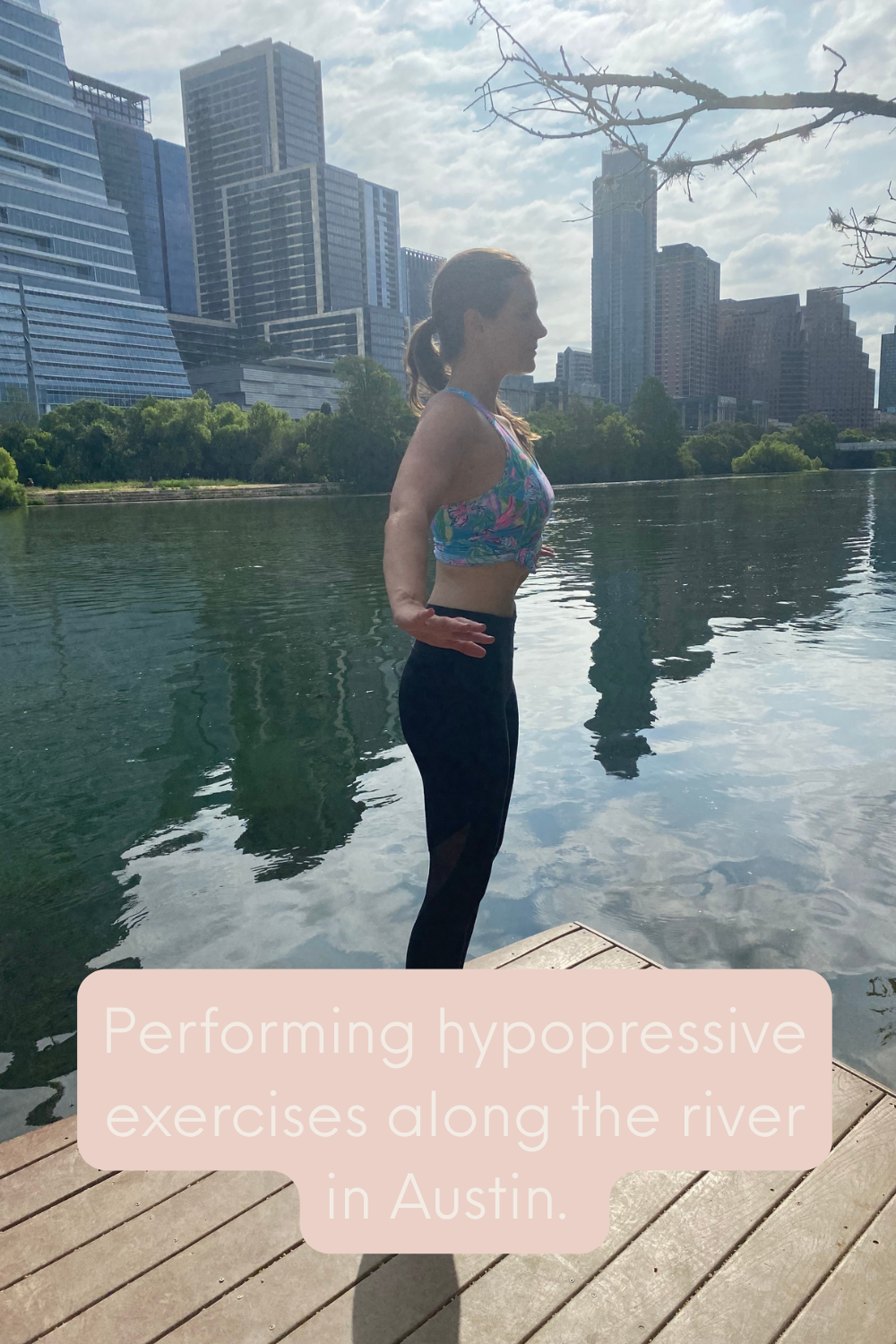
An obversation in Austin…
Several years ago, my husband and I took a trip to Texas. We stopped in Austin as part of that trip and stayed along the river. One morning, we took a walk on the path that borders the river. I remember watching the runners and observing how many of them displayed poor postural control and compensatory patterns in their neck and low back areas as they ran.
The most common postural compensation that I observed was overactive upper traps. Your upper traps are located on the very top of your back in the space between your neck and your shoulders. These muscles help to bring your shoulders up toward your ears when you shrug. They are one of the most over-utilized muscles that I have observed in my time as a physical therapist.
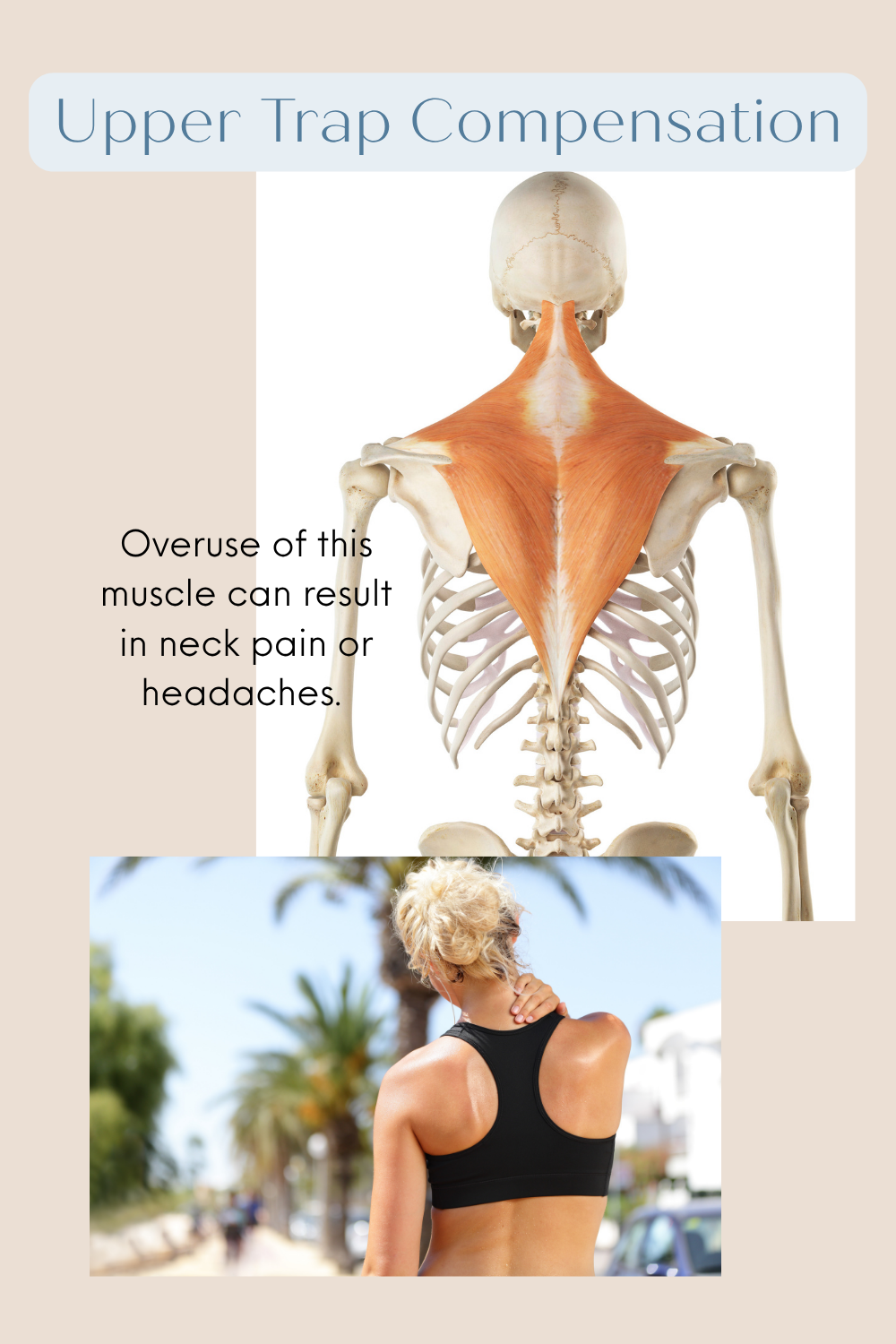
Overactive upper traps can be a compensation for weak shoulder muscles, weak neck muscles OR can serve as an aid for inspiratory muscles. Additionally, they hold tension from stress. Overuse of the upper traps often results in neck pain, tightness and headaches associated with this tightness.
Running and Headaches
If running seems to trigger headaches, it could be that you are compensating for either neck stabilization or respiratory capacity with this muscle. If this is the case, Low Pressure Fitness can be very beneficial. The postural positions of Low Pressure Fitness help to build neck stabilization strength and the respiratory training strengthens your primary inspiratory muscles. Inspiratory muscles are the skeletal muscles that contract to expand the thoracic cavity and draw air into the lungs. If these areas are strong, you are less likely to rely on your upper traps to pick up the slack.
Running with Low Back Pain
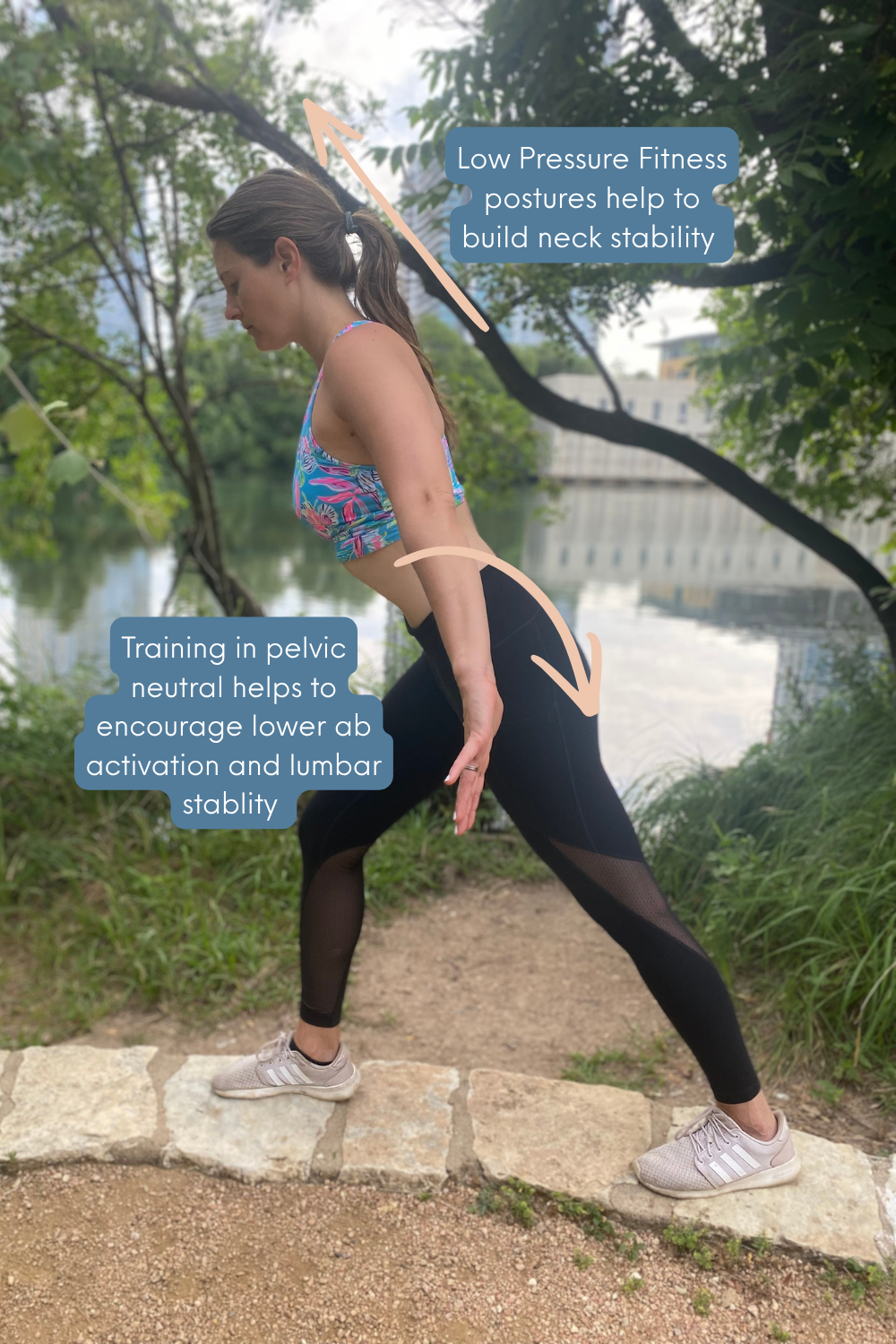
The second postural phenomenon that I observed during this time was the excessive anterior pelvic tilt and poor pelvic control. The consequence of this was poor lumbar stability and obvious increased stress in the low back. Poor pelvic stability is often due to both decreased lower abdominal activation and poor hip strength. When your lower abs are unable to stabilize your back and pelvis, you typically end up with what we refer to as a hinge point in your lumbar spine. Meaning that instead of having a nice gentle curve throughout your low back that eases into your mid back, most of your curve reversal happens at one segment. This results in increased stress at that individual segment which can often result in pain.
If you experience low back pain during or after running, Low Pressure Fitness can help. Practicing hypopressive exercise strengthens your lower abdominal muscles, allowing you to maintain pelvic neutral and encourage a nice spinal curve. This posture decreases strain at your spine and allows you to run pain-free.

Optimizing Intraabdominal Pressure while Running
One of the goals that many women have postpartum is to return to running. All too often, this goal is inhibited by urinary leakage or the feeling of pelvic heaviness. Some women pass leakage off as a normal part of postpartum. For others, leaking is enough of an issue that they don’t return to running at all. Whether you like running enough to endure pelvic symptoms while doing it, or if you have stopped running because of these symptoms, I want you to know that you don’t need to put up with these things to run! It is possible to run without pelvic symptoms.
There are two primary issues that may be influencing your pelvis’s ability to perform well while running: how you manage your intraabdominal pressure and pelvic muscle endurance.
Intraabdominal Pressure
Your intraabdominal pressure is influenced by both your posture and your breath pattern. Pressure is space/area. I talk extensively about intraabdominal pressure in my pelvic organ prolapse blog. Here is the shortened version:
If you increase your rib cage capacity AND you improve your postural control, you end up increasing the space in your torso. This increase in space results in decreased intraabdominal pressure. When intraabdominal pressure decreases, it puts less stress on your pelvic floor. This means that two people with the same pelvic floor strength may experience vastly different symptoms if they manage their intraabdominal pressure differently.
Pelvic Muscle Endurance
There are several ways in which you can address pelvic muscle strength and endurance. Low pressure fitness can also help in this area, along with pelvic floor contractions. I truly think that this is a case in which pelvic floor contractions (often referred to as Kegals) may be beneficial. However, it is just one piece of the puzzle. Low Pressure Fitness provides the added benefit of pelvic floor coordination, specifically targeting slow twitch fibers, which is important for running and being involuntary (meaning that you don’t have to think about contracting your muscles for it to happen). Who wants to think about contracting the pelvic floor the entire time you are running? It simply is not practical.
If you are curious about what it actually takes to stop leakage in general, I recommend reading the blog
“Why Kegels are Not Helping Your Incontinence and What To Do Instead.”
Improving Your Respiratory Function with LPF
Low Pressure Fitness helps improve your respiratory function in two ways:
It strengthens your inspiratory muscles and ribcage ROM.
It improves your body’s ability to carry oxygen due to the apnea
In order to take a full breath, your ribcage needs the ability to expand. This may sound like common sense, but I would challenge you to really check and see how much your ribcage moves while you inhale. Most people have more limitations in this area than they think. Additionally, if your ribcage motion is limited, you are not giving your primary inspiratory muscles the optimal ability to perform. When this happens, you typically end up breathing higher in your chest and utilizing the upper traps as discussed earlier.
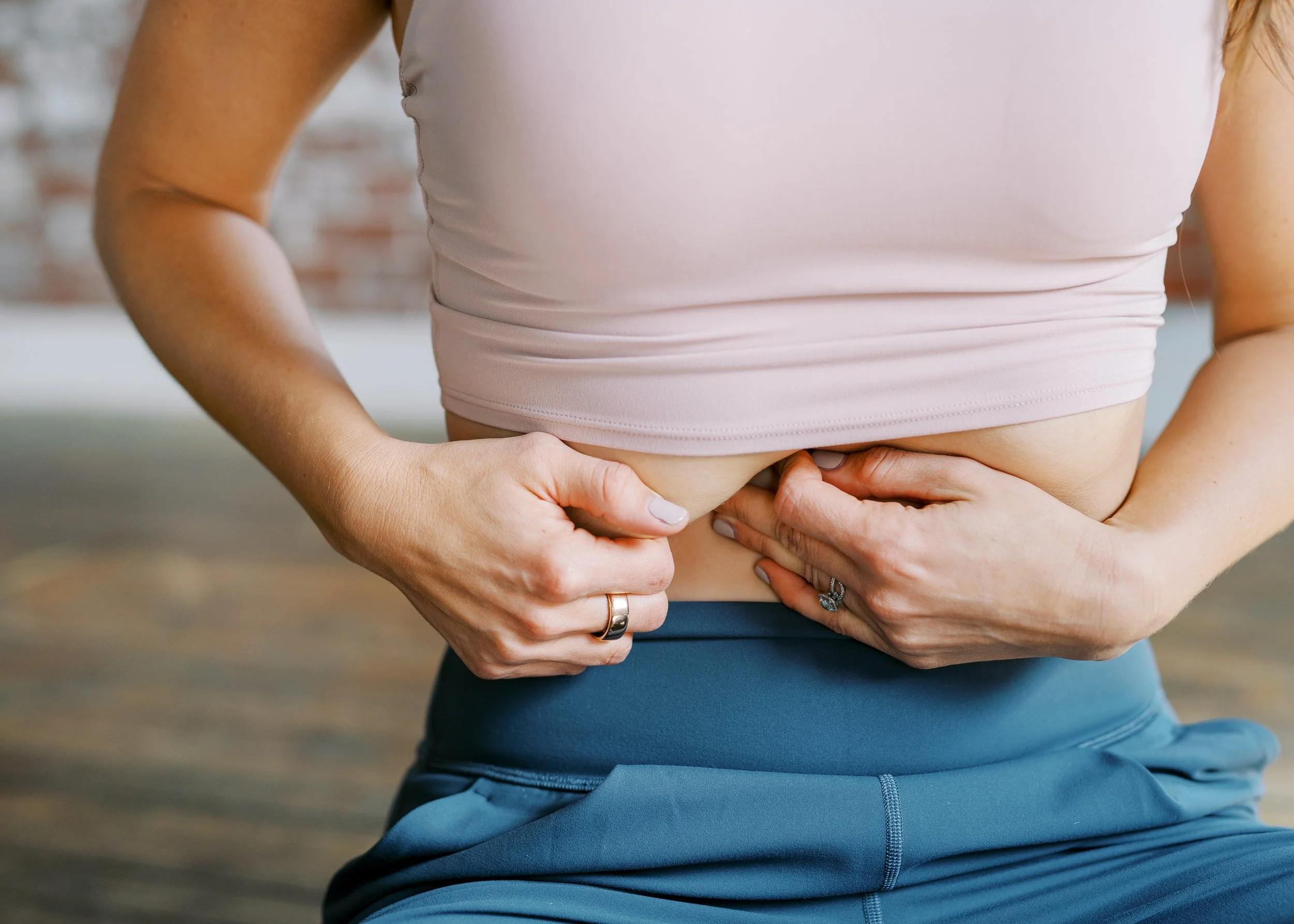
Using the Hypopressive Mechanism to Improve Respiratory Function
The hypopressive mechanism itself also helps to improve respiratory function due to the apnea component. When you train with intermittent apneas, your body adapts to carry oxygen more efficiently. It has a similar effect to training at altitude, only you don’t need that plane ticket to Colorado. For endurance athletes, this can truly give you a slight edge.
Low Pressure Fitness in Postpartum
Low Pressure Fitness can be a game changer for postpartum women for many reasons. I document how it helped me postpartum here. One additional benefit it can provide, is specific to runners or other endurance athletes. Postpartum often requires a period of rest from sport, and hypopressive exercise aids in keeping respiratory capacity high throughout this time period.
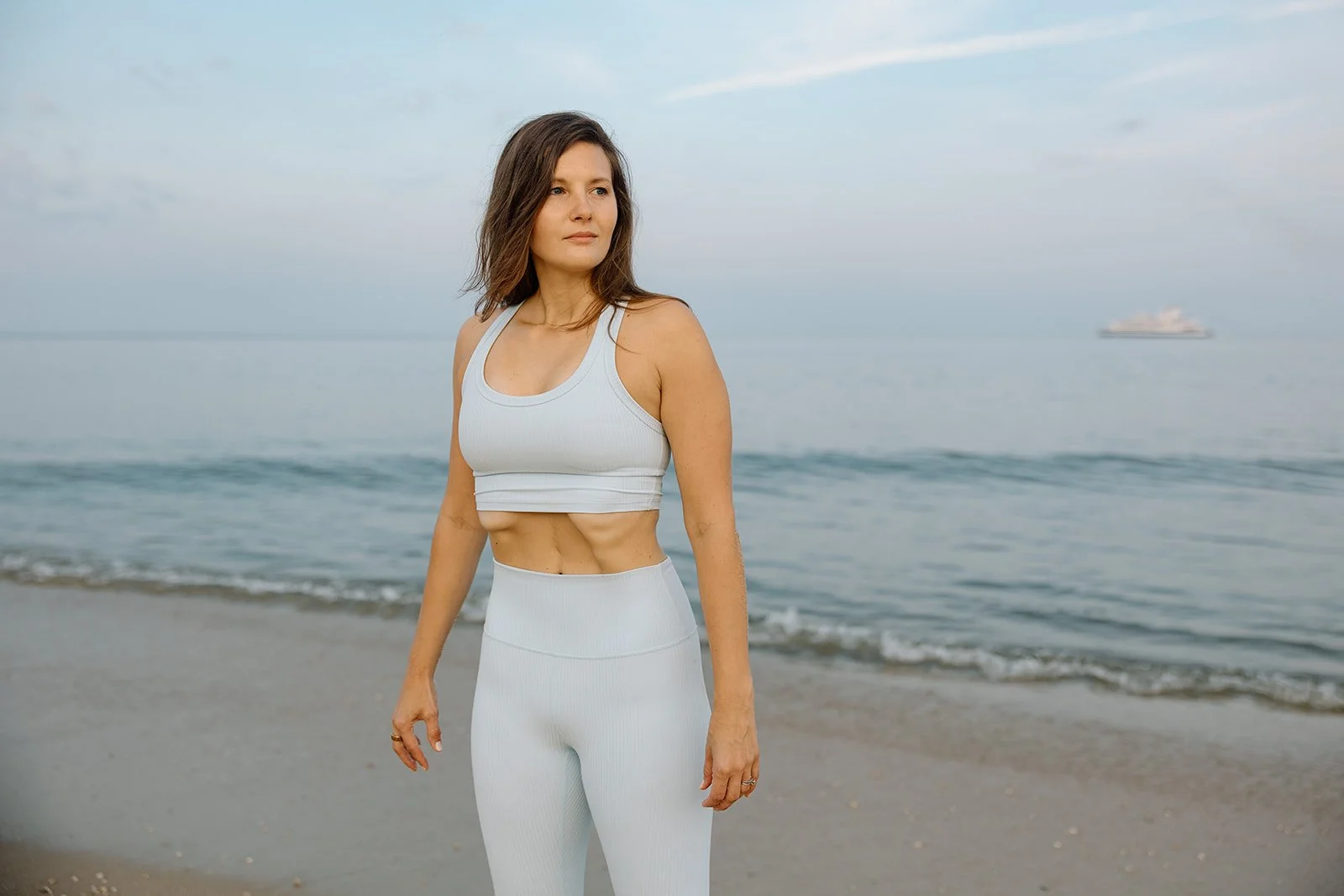
My client Becca first made me think about this benefit in this way after experiencing it postpartum.
This is what she had to say:
“I was surprised to find that after almost a year of not running, my lung capacity felt about the same. I ran almost a full mile with nose breathing after not running for 11 months.”
If you are a runner who would like to add hypopressive exercise to your training regime I have several options for getting started….
HYPOPRESSIVE EXERCISE ONLINE CLASSES
I teach several live classes a week. I highly recommend that you start with an “Intro to LPF: Breath” class if you are able!
HYPOPRESSIVE ONLINE COURSES
If live classes simply are not in the cards for you during this season, I have 2 different online courses that contain everything that you need to implement Low Pressure Fitness hypopressive exercise.
Core Shift is my original course that walks you through the practice step by step. IGNITE is a 30 day challenge program. Honestly, both courses are great and which one you choose is a matter of preference.
THE HYPOPRESSIVE PROJECT ONLINE MEMBERSHIP
If you would like access to everything, including all courses and live classes, I highly recommend The Hypopressive Project All Access Membership. I created this membership to be the ultimate, accessible resource to help you get started and grow your hypopressive exercise practice. I would be honored if you would join me there!
I hope to see you in class soon!