
Hypopressive Exercise for Endometriosis

Endometriosis is a whole body condition in which endometrial tissue grows outside of the uterus. Its effects are not always simple and the symptoms can be vast as it can influence many body systems.
Thriving with endometriosis requires a full tool bag that allows your body to make the most of its strengths and help minimize the challenges.
Hypopressive exercise is one tool that I believe can be very valuable for those with endometriosis. It will not make the condition go away, but it can help to negate some of the downstream side effects that those with endometriosis often experience. These include digestive challenges, the presence of scar tissue and adhesions, pelvic floor tension and nervous system amplification of pain.
Hypopressive Exercises For Digestion
Gut health can be a challenge for those with endometriosis. I have witnessed many patients and clients who pursue aggressive gut health protocols with marked relief, only to have their symptoms return after a period of time.
One of the things that I believe is under-treated in general for those with gut issues is mobility and motility. Mobility refers to the organ's ability to move within the body. Motility refers to the movement within the organ to help move food through the system, sometimes called peristalsis. Motility is important for overall digestion and can be affected by many things, including poor mobility, stress and adhesions.
You can address your microbiome and do the best elimination diet ever for SIBO or other gut issues, but if you do not address motility it is likely that overgrowth or other challenges will reoccur and symptoms will return.
Endometriosis can sometimes adhere to various digestive organs which has the potential to decrease both mobility and motility.
Additionally, many women with endometriosis often undergo surgery as a part of their treatment plan. Although this may help to relieve some symptoms, scar tissue often develops afterwards. This is frequent, even with skilled excision surgery. Scar tissue can also decrease mobility and motility of the digestive system.
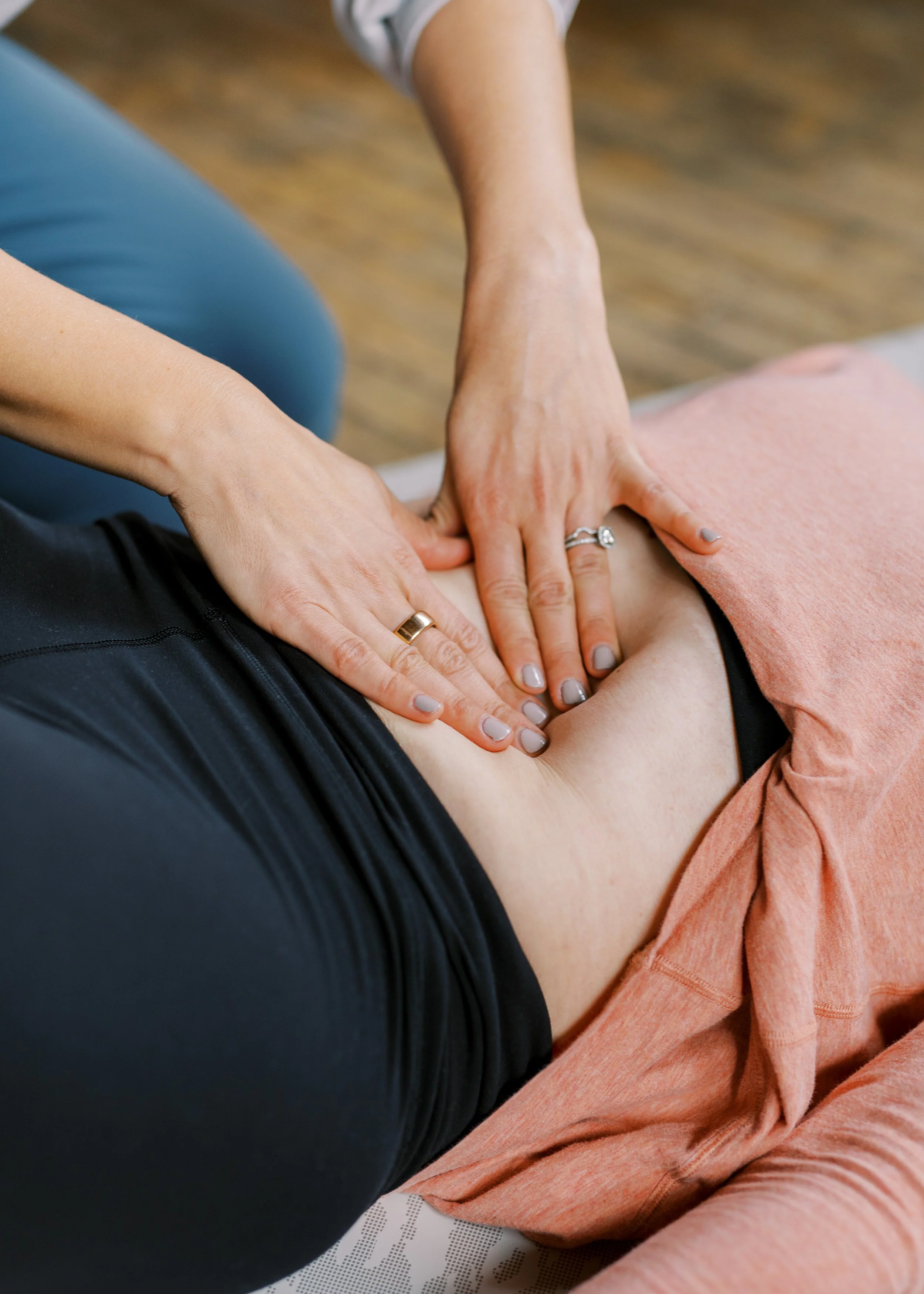
Motility can be helped with pro kinetic supplementation, but it can also be aided by helping to manually move the digestive organs.
Skilled practitioners may do this through visceral mobilization. You may have been encouraged to do this with something called the ILU massage.
However, both of these methods have drawbacks. Visceral mobilization requires that you find a skilled practitioner and spend the time and money to work with them. Although this can be well worth it, it leaves you dependent on the practitioner.
ILU massage can be done independently, but it only addresses motility within the large bowel and its effectiveness can have its limitations.
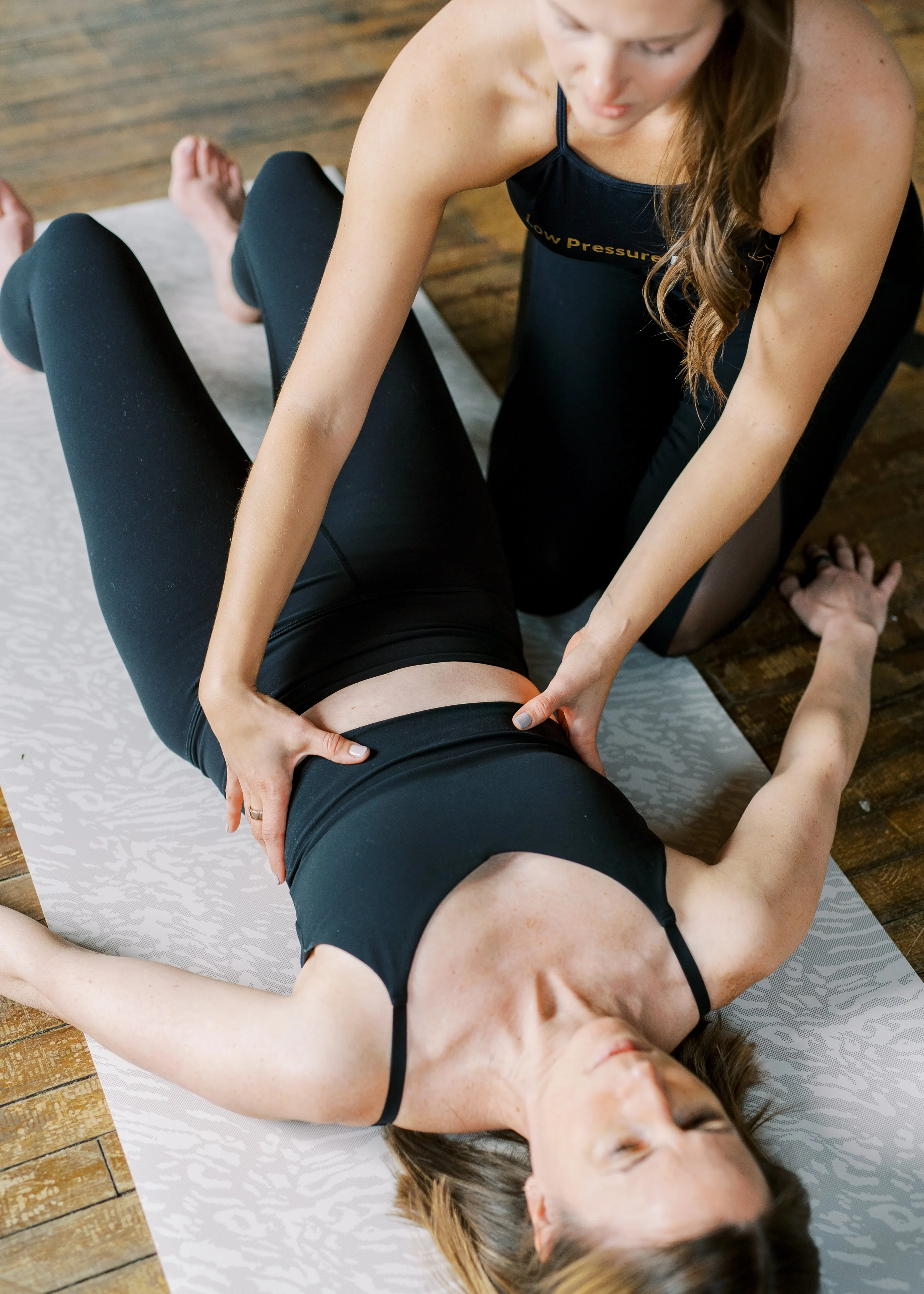
Another way to encourage motility is with your breath. If you take full diaphragmatic breaths your diaphragm acts to massage your organs and encourages both mobility and motility. The greater your diaphragm excursion, the greater potential effect you will create.
Low Pressure Fitness hypopressives help to optimize the excursion of your diaphragm. The hypopressive maneuver itself can be quite potent in this way. Practicing Low Pressure Fitness can be a wonderful way to help independently address both the slowed gut motility and the limited organ mobility those with endometriosis so often experience.
Hypopressive Exercise For Abdominal Scar Tissue
Your digestion is not the only thing that can be negatively affected by decreased visceral mobility.
Your body is connected by chains of muscle and connective tissue known as fascial lines. As mentioned above, abdominal adhesions can limit the mobility of your organs. When the mobility of an organ is limited it can influence any fascial line that the organ has connections to. Any limitation within a fascial line can affect other areas of the body that happen to be within the same fascial line.
An example of this is your liver. If your liver lacks mobility it can affect the ability of your right shoulder to move. If your large intestine lacks mobility it can affect your SI joint.
I have seen a few patients who experience new pain following excision surgery. These patients tend to become fearful that their endometriosis has returned. In some cases this is the truth and always worth investigating. In other cases I suspect it is simply the downstream effects of scar tissue. New surgical adhesions can cause similar musculoskeletal pain as previous endometriosis adhesions and can also result in new areas of pain.

As I mentioned above, the hypopressive maneuver can help encourage mobility within the abdominal cavity and can help to encourage realignment of scar tissue. Additionally the Low Pressure Fitness poses are designed along the different fascial lines in your body. This means that you will systematically mobilize these lines throughout the practice. This mobilization reduces the downstream effects of the abdominal adhesions.
Again, improving the surrounding mobility is not going to make endometriosis go away. However, if you are having symptoms distally because of endometriosis, I do believe those symptoms can be made better by improving the mobility of the surrounding tissue and the involved fascial line.
Additionally, abdominal and pelvic pain that is caused by scar tissue can be improved through Low Pressure Fitness practice. I personally have experienced significant relief in my abdomen following abdominal surgery. Scar tissue can realign over time in a way that decreases restriction and pain. So if the pain you are experiencing is post surgical you may experience relief of the abdominal and pelvic pain along with relief in the rest of your fascial chain.
Low Pressure Fitness For Chronic Pain
Stress can amplify pain.
It's a real bummer because pain can be a real source of stress. Especially in the case of chronic illness.
However, understanding how pain works can be empowering.
Pain is a perception in our brain. This does not mean the pain is not real. It does not mean it is “all in our head”. It DOES mean that our brains can take the same thing happening in our body and make it either very painful, or not as much.
How does our brain decide what is painful? It typically is dependent on past experiences along with our nervous systems state. If we are in a state of stress we are more likely to perceive stimuli as pain. If we are in a calm state, our body assumes a status of safety and may not perceive the stimulus as painful.
Typically those of us with chronic conditions, like endometriosis, have experiences in our past in which pain has indicated true harm. Because of those experiences, our nervous system's baseline assumption tends to be that pain equals harm. However, we sometimes come to a place where that assumption is no longer legitimate. Our bodies start creating mountains out of molehills if you will. I truly believe that pain deserves to be investigated, but I do think that it is helpful to understand that not all pain equals harm.

At some point, it becomes important to guide our nervous system back to a calm state in order to decrease the amplification of pain. Our breath is the fastest way to intentionally point our nervous system toward assuming safety. When we can control our breath we can reset our nervous system. In doing so, we can help decrease our body's pain perception.
Low Pressure Fitness is a breath work practice. In general I find Low Pressure Fitness to be approachable even if you struggle with isolated breath work or meditation. In Low Pressure Fitness the breath work is paired with other physical tasks, giving your mind something to focus on. It can be a wonderful tool to help break the pain-stress-pain loop.
Low Pressure Fitness For Pelvic Floor Relaxation
Pelvic floor challenges are often present in those with endometriosis. Inflammation in the pelvis/abdomen, scar tissue and stress are the perfect recipe for pelvic floor tightness and pain.
Traditional pelvic floor strengthening, often referred to as Kegels can actually be counterproductive in this situation.
Many find relief with manual work received during pelvic floor physical therapy or with the utilization of dilators. Both of these things can be wonderful tools. However, as discussed above, manual work has limitations as it requires a practitioner. The use of dilators can be tedious from both a setup and privacy perspective. In both of these situations you are not truly addressing the root of the pelvic floor tightness, merely addressing the symptoms.
Our pelvic floor should move in rhythm with our respiratory diaphragm. When it does so, it should lengthen with our inhale, and contract slightly with our exhales. In order to have an optimally functioning pelvic floor we need both the contraction/lifting and the relaxation/lengthening. We are not getting optimal lengthening with our inhales in most cases of pelvic floor tightness. This decreased length in our pelvic floor can actually be because our diaphragm is not moving optimally. Sometimes, we are able to improve pelvic floor length by addressing what is happening at the diaphragm.
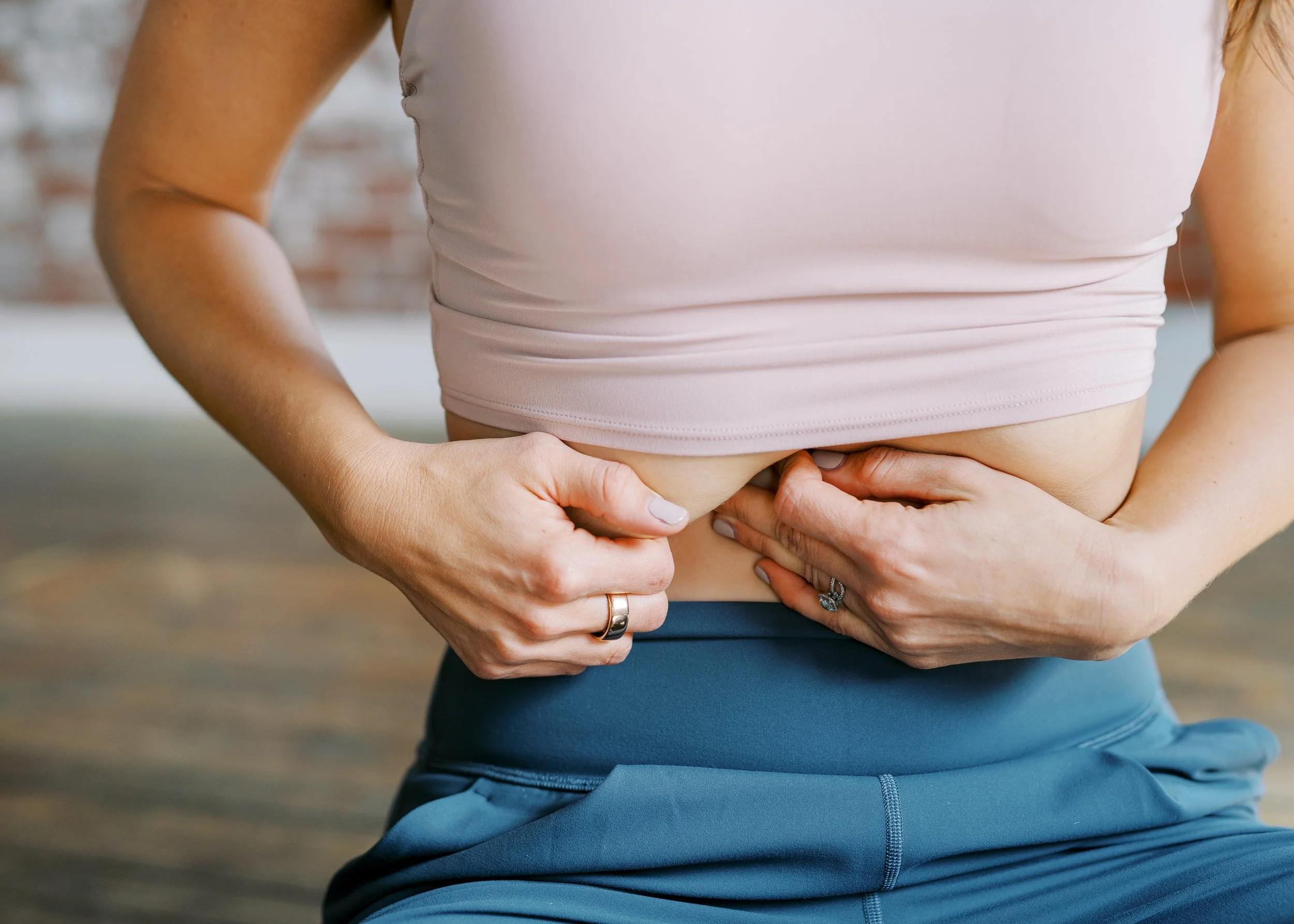
Addressing the diaphragm is a very approachable method as it does not require internal work. You can easily assess what is happening at the diaphragm externally. Additionally I have found the results tend to be a bit more long lasting. While dilators and manual work can provide short term relief, optimizing pelvic floor length by working with the diaphragm can help provide more lasting relief.
Once again I love this because it does not leave you dependent on a practitioner, or even a physical tool to bring relief.
Optimized pelvic floor function is just one more reason I truly believe those with endometriosis benefit from having Low Pressure Fitness in their tool belt.
How to Get Started
Ready to give it a try?
I have several options for getting started with Low Pressure Fitness, including my self paced courses Core Shift and IGNITE, live zoom classes or private sessions.
I hope to see you in class soon.
