Low Pressure Fitness for Bladder Pain & Interstitial Cystitis

MY PERSONAL EXPERIENCE WITH BLADDER PAIN.
One of the things that I experienced following my abdominal surgery in 2015 was a substantial increase in bladder pain and urinary urgency. I mentioned this particular form of pelvic pain to my OBGYN at the time. Her response was that I “likely had IC”. She offered to refer me to a urologist to explore imaging and medications. I was not super interested in medication and honestly had other, more pressing health concerns, so I declined. My symptoms continued to wax and wane until I began practicing Low Pressure Fitness. It was at that time I noticed a significant decrease in my symptoms until they eventually disappeared.
I count myself lucky to have found Low Pressure Fitness when I did. I know many other women have similar origin stories with very different results.
The Most Common Interstitial Cystitis Story
Not everyone is so lucky to stumble upon relief when they are not looking for it. Many women search for years for solutions to manage bladder pain. Throughout my time working as a pelvic health PT I have seen many patients with similar stories:
They have terrible pelvic pain. They are told they have IC. However when they receive imaging (often along with a bladder instillation) there is no evidence of lesions on the bladder or markers of true cystitis. These women are told their bladder “looks a little red” or “looks fine”. They are often given medication, despite the “negative” imaging. The medication is not effective (which is no wonder since they had no markers of true interstitial cystitis) and ultimately many discontinue the medication after experiencing negative side effects.
Most of the patients that I saw were determined not to allow daily pain to become their fate. Some tried pelvic physical therapy first, some only came to PT after adopting restrictive diets or expensive supplement routines. I am all about a therapeutic diet for a short period of time, however, it is often only a pathway to relieve symptoms temporarily and then tends to be somewhat unsustainable. I also feel that life without coffee is not really living. For most of these patients, dietary bladder irritants are the straw on the camel's back, not the underlying cause.
THE ROOT CAUSE OF BLADDER PAIN
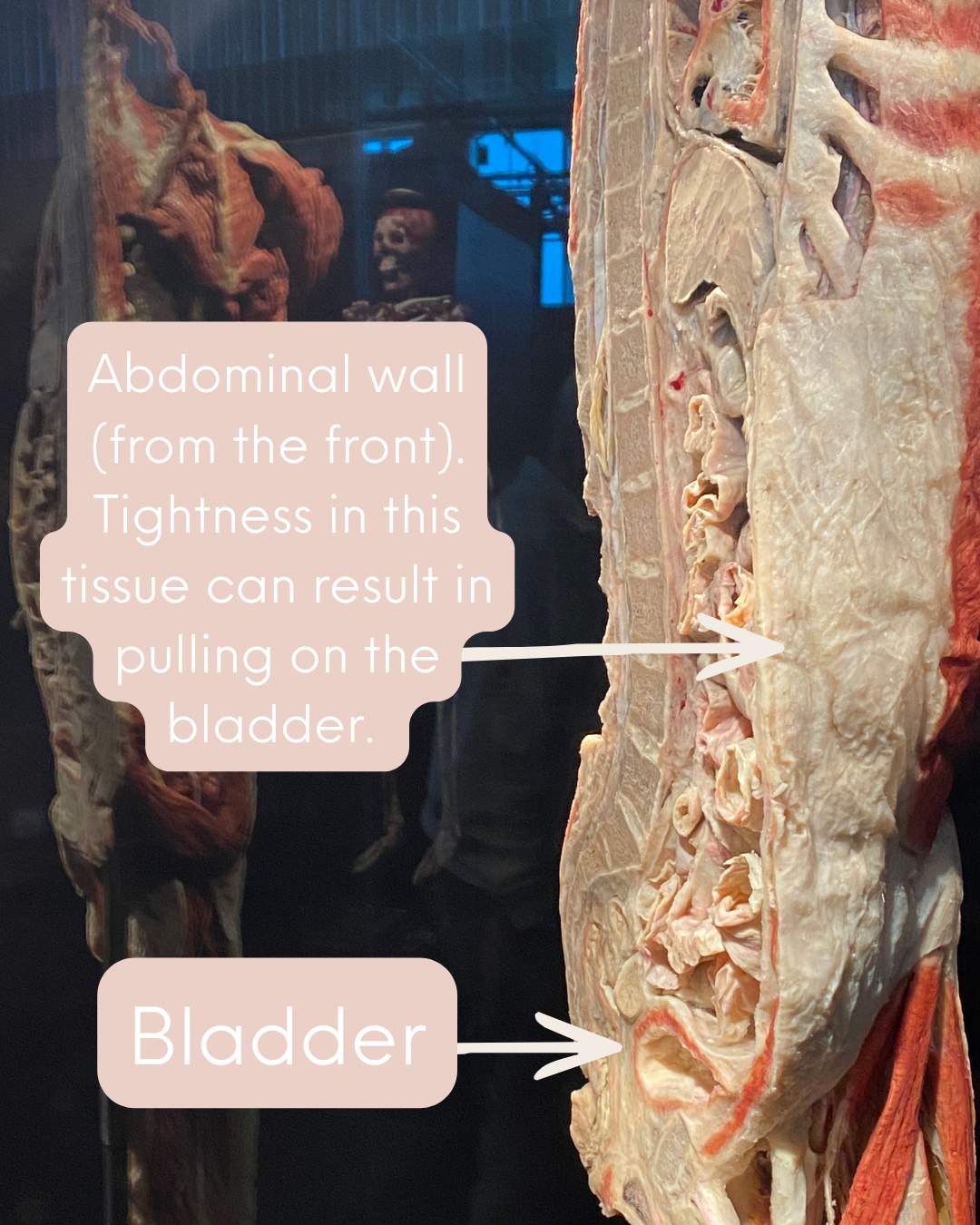
So, if the cause of the pain is not coming from INSIDE the bladder, where is it coming from?
Anatomically, the bladder is influenced by both the pelvic floor AND the abdominal fascia. When the tissues surrounding the bladder become tight, they can pull on the bladder and mimic the sensation of pain or urgency. So instead of the irritation coming from inside the bladder it can sometimes actually be coming from around it.
There are a variety of reasons why the pelvic floor and abdominal fascia may be restricted. These reasons include stress, surgery, and strenuous activity among other things.
Many pelvic physical therapists are well aware of the influence that the pelvic floor muscles have on bladder sensation. “Downtraining”, manual release of the pelvic floor muscles, and dilator therapy are common interventions. However, not as many physical therapists address the abdomen or the restriction of the bladder itself.
I have treated many clients over the years that have only found lasting relief when the tightness that they carry in their abdomen is also addressed.
The “root cause” of bladder pain is variable. However, for some, it may be the tension in the abdomen. If you are currently struggling to decrease your bladder symptoms and have not yet evaluated and treated the potential influence of your abdomen, I highly recommend it.
HOW LOW PRESSURE FITNESS HELPS BLADDER PAIN
HYPOPRESSIVE EFFECTS ON THE BLADDER
One of the things that happens when you perform the hypopressive maneuver is a mobilization to the bladder. I know it is strange to think about, but your bladder should have the ability to move within your pelvis. When you walk, jump, run, bend over or sit down the bladder SHOULD move and glide with the tissues around it to accommodate that movement. If the bladder is not able to move in this way, then the tissue around it will pull on the bladder as you move throughout your day.
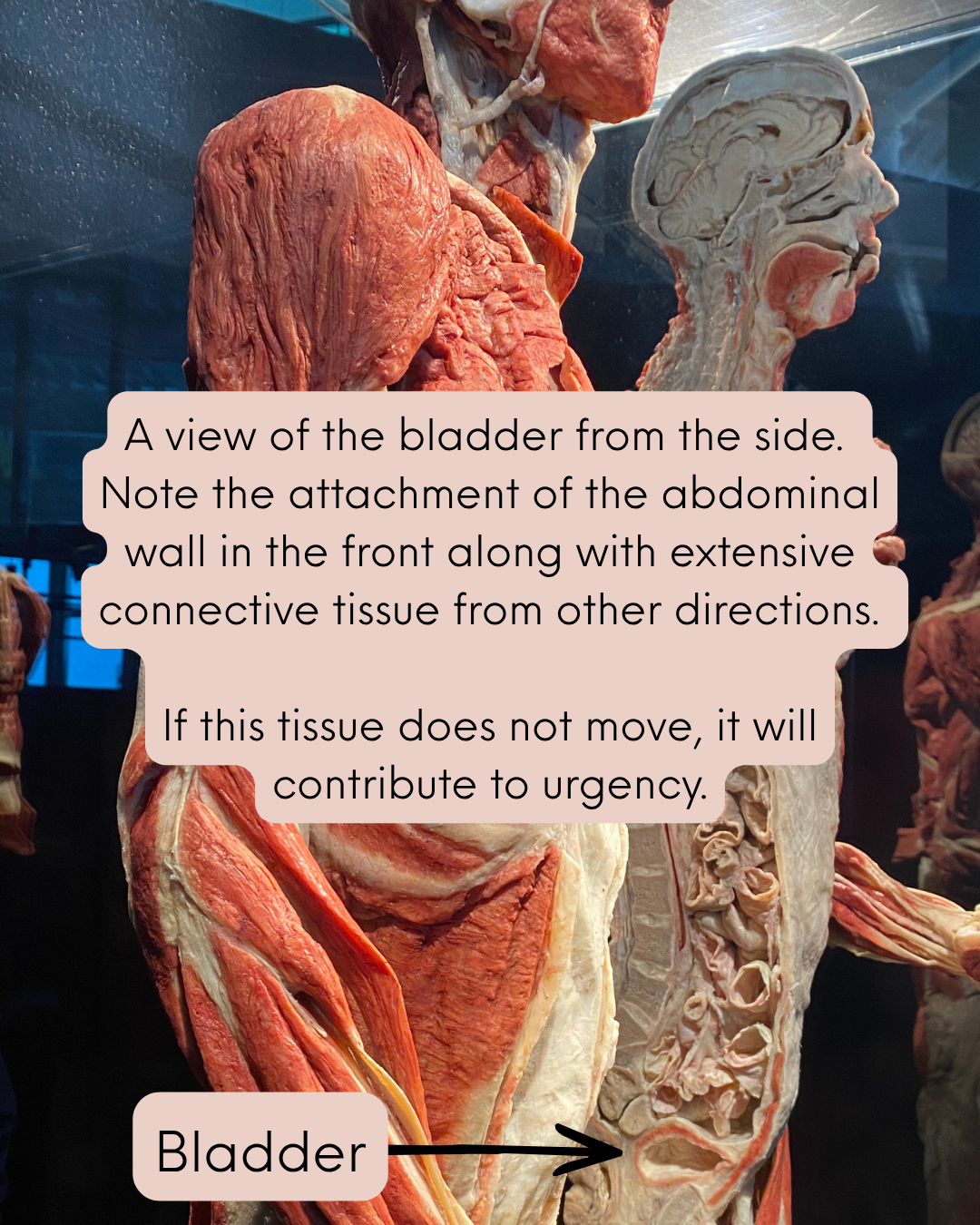
Our bladder is composed of unique muscle tissue with stretch receptors. As your bladder fills and expands, the stretch receptors signal your brain that your bladder is filling and prompts you to take a trip to the bathroom.
However, the stretch receptors can also be pulled on by the tissue surrounding it. If the bladder can’t slide and glide during movement, the tissue around the bladder will pull on it and activate the stretch receptors. This activation of the stretch receptors will send the same signal to your brain as when your bladder is filling from the inside. Your brain perceives this as a full bladder, making you feel like you constantly need to go to the bathroom even when you don’t.
Having a mobile bladder is imperative to finding relief with urgency and bladder pain.
The hypopressive maneuver has been shown on real time ultrasound to lift the bladder toward the head. In doing so it encourages mobilization of the bladder within the tissues around it. If there is restriction, it will slowly stretch these tissues, eventually allowing your bladder to move within the pelvic cavity without activating the stretch receptors.
I do think it is important to note, that if there is restriction around your bladder, you may experience urgency during the practice due to the activation of the stretch receptors. However, when you frame it as something temporary that you have control over, just like you would any other stretch, it becomes much less irritating. Eventually, it can provide long term relief of the constant experience of this sensation.
HYPOPRESSIVE EFFECTS ON THE ABDOMINAL WALL
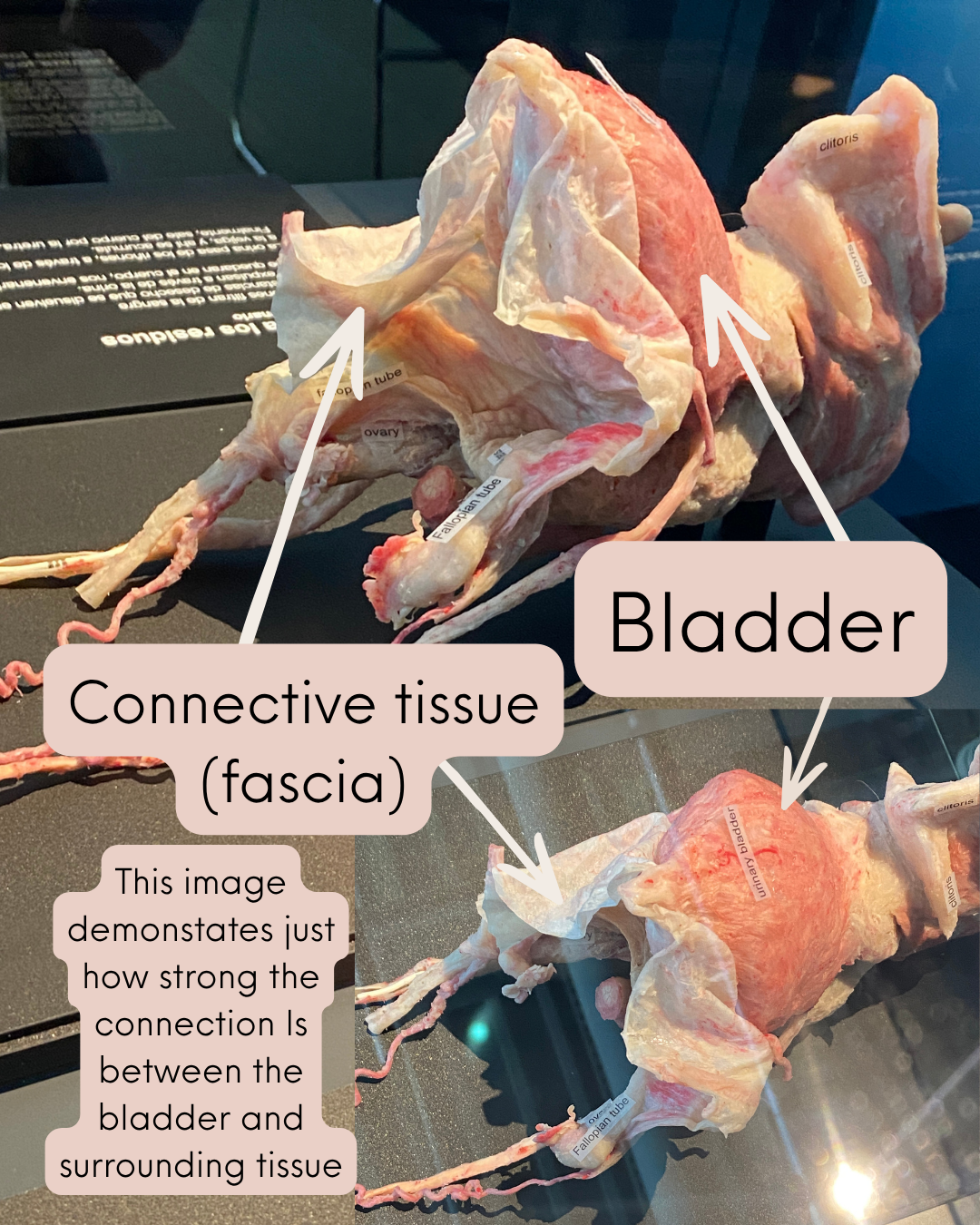
In addition to mobilizing the bladder, the hypopressive maneuver also mobilizes the entirety of the abdominal wall.
Why is this important?
One of the things that shares connection with the bladder is the abdominal wall. This means that any tightness within the whole system can result in increased pulling on the bladder. I find this is a very under-discussed variable when it comes to bladder pain.
The reality is that many of us have been taught to “suck our stomach in”. Additionally the abdominal exercises we have been shown as “ideal” core work throughout our lives constantly increases abdominal tension. This tension can have several detrimental effects including increasing our bladder pain.
If you are currently managing bladder pain, it is important to consider what the effects of your abdominal or core exercises may have on your bladder pain. If you have ever noticed that your symptoms seem to increase after you workout, this is especially important to be aware of.
I admit, it does feel like a catch 22 because having a strong core is important for overall pelvic health. HOWEVER, it is also important to have a mobile core. Sucking it in all day and traditional core work tend to lead us to having increased tension and very little mobility.
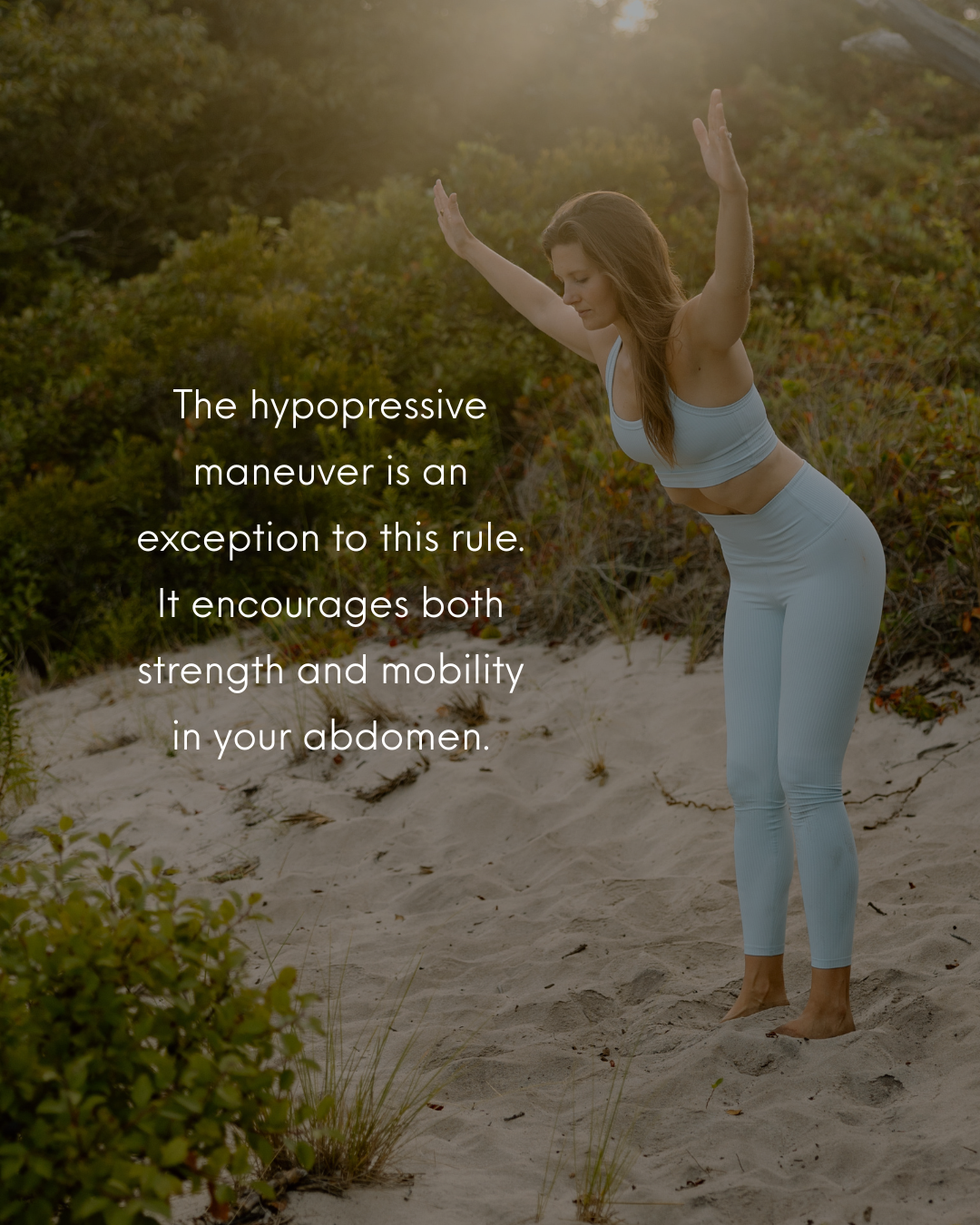
The hypopressive maneuver is an exception to this rule. It encourages both strength and mobility in your abdomen.
I do think that traditional core work can be okay for some people. I am not one of those people, and I would argue that if you are currently experiencing relentless bladder pain, there is a good chance you are not one of those people either.
Teaching your abdomen to support you without clenching, letting go of sucking in, and swapping your traditional core exercises for hypopressives may have a profound impact on your symptoms.
HYPOPRESSIVE EFFECT ON THE PELVIC FLOOR
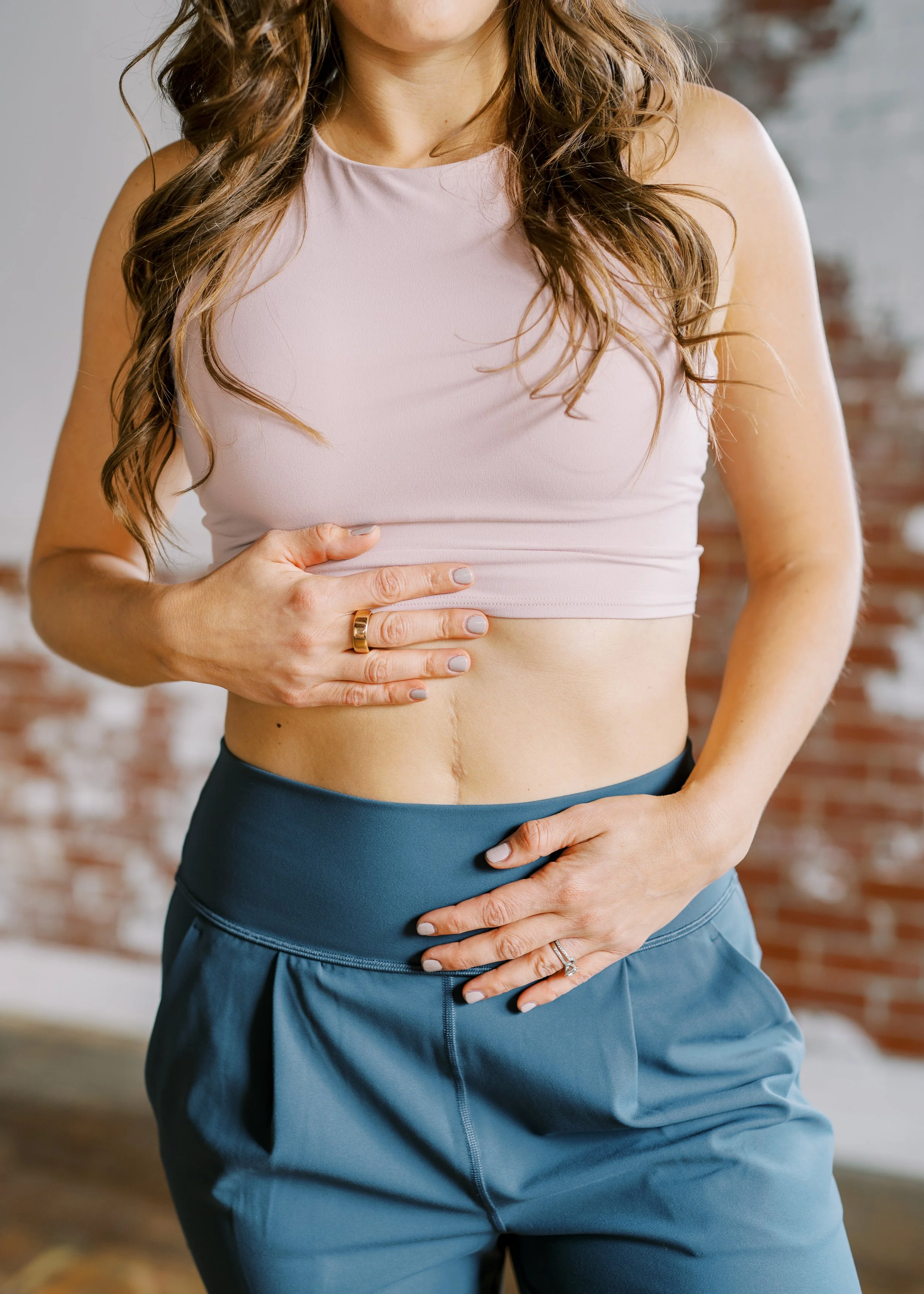
The breath work component also encourages the pelvic floor to find its optimal length.
One of the difficult things about urinary urgency and bladder pain is that it can sometimes be accompanied by urinary incontinence.
At a very basic level, the standard treatment for incontinence is pelvic floor exercise. However, as mentioned above, in the case of bladder pain, the pelvic floor is often tight and restricted. Pelvic floor contractions can exacerbate this pain. It sometimes feels difficult to address both issues–leakage and pain–as the “standard” treatments for one may exacerbate the other.
Thankfully, the hypopressive maneuver actually does address both.
The hypopressive maneuver works to help restore the connection between the diaphragm and the pelvic floor. In doing so, it helps restore pelvic floor strength, length and coordination. Read more about this in my blog post, “Why Kegels Aren’t Helping Your Incontinence: What To Do Instead”.
Additionally, the breath work component also aids in nervous system regulation, which can at times, be the source of pelvic floor tightness. Overall the hypopressive maneuver helps to restore complete function of the pelvic floor, which is why I advocate for it.
How to get started with Low Pressure Fitness.
HYPOPRESSIVE EXERCISE ONLINE CLASSES
I teach several live classes a week. I highly recommend that you start with an “Intro to LPF: Breath” class if you are able!
HYPOPRESSIVE ONLINE COURSES
If live classes simply are not in the cards for you during this season I have 2 different online courses that contain everything that you need to implement Low Pressure Fitness hypopressive exercise. Core Shift is my original course that walks you through the practice step by step. IGNITE is a 30 day challenge program. Honestly both courses are great and which one you choose is a matter of preference.
THE HYPOPRESSIVE PROJECT ONLINE MEMBERSHIP
If you are looking for a way to support your body through movement, breath, and intentional practice, I would love to invite you to: The Hypopressive Project All Access Membership. I created this membership to be a comprehensive and accessible resource where you can learn, practice, and grow your hypopressive exercise journey at your own pace. Whether your goals are improving how you feel in your body, building confidence, supporting your core, or exploring aesthetic changes in a way that honors your body, you are welcome here.
My hope is that this practice helps you feel stronger, more connected, and more confident in the body you already have. I would be honored to have you join me in The Hypopressive Project.
I hope to see you in class soon!