Low Pressure Fitness for Autoimmune Conditions: Benefits of Hypopressive Exercise
There was a time in my life that I identified as an athlete. I was willing to train my body in stressful ways to gain a performance advantage.
However, in my mid-twenties I experienced HPA axis dysfunction along with chronic fatigue and pain, and eventually was diagnosed with an autoimmune condition. See my Autoimmune Journey Blog here.
One of the things I had to contend with was the feeling that my identity as an athlete had been stripped away. Training my body in a stressful way simply was not an option anymore. My diagnosis took everything that I believed about exercise and turned it on its head, forcing me to find more nourishing ways to move my body.
Thankfully, I discovered Low Pressure Fitness hypopressive exercise as I was recovering from my autoimmune condition. I was not looking for it as a solution to my autoimmune fatigue, but rather discovered it as I was looking for solutions for the concurrent pelvic and abdominal conditions that I was experiencing (See more about my journey to LPF here). Although it was not my autoimmune condition that brought me to the practice, I truly believe that one of the reasons that I was able to bring my autoimmune symptoms into remission is because of Low Pressure Fitness.
Low Pressure Fitness can be beneficial for those with autoimmune conditions for the following reasons:
It encourages parasympathetic nervous system activation
It strengthens the body in a neutral posture, which can be a game changer when hypermobility is involved
It can encourage gut motility and help to optimize gut health
Exercise as Stress
When recovering from my autoimmune condition, one of the things I had to adjust to was the idea that exercise could be a stressor. And not a good one.
Studies have indicated that intense exercise can lead to increased intestinal permeability, sometimes referred to as leaky gut. In a fully resilient person who trains appropriately, this can be okay. However, leaky gut is almost always a contributing factor to autoimmunity. So if you are recovering from an autoimmune condition, it is likely best to abstain from intense exercise for a period of time.
This does not mean that you should not move though. Exercise in general has been shown to decrease pain, fatigue, and improve quality of life. It’s all about finding the right movement. For those with autoimmunity, this often means finding a form of exercise that strengthens the body and calms the nervous system.
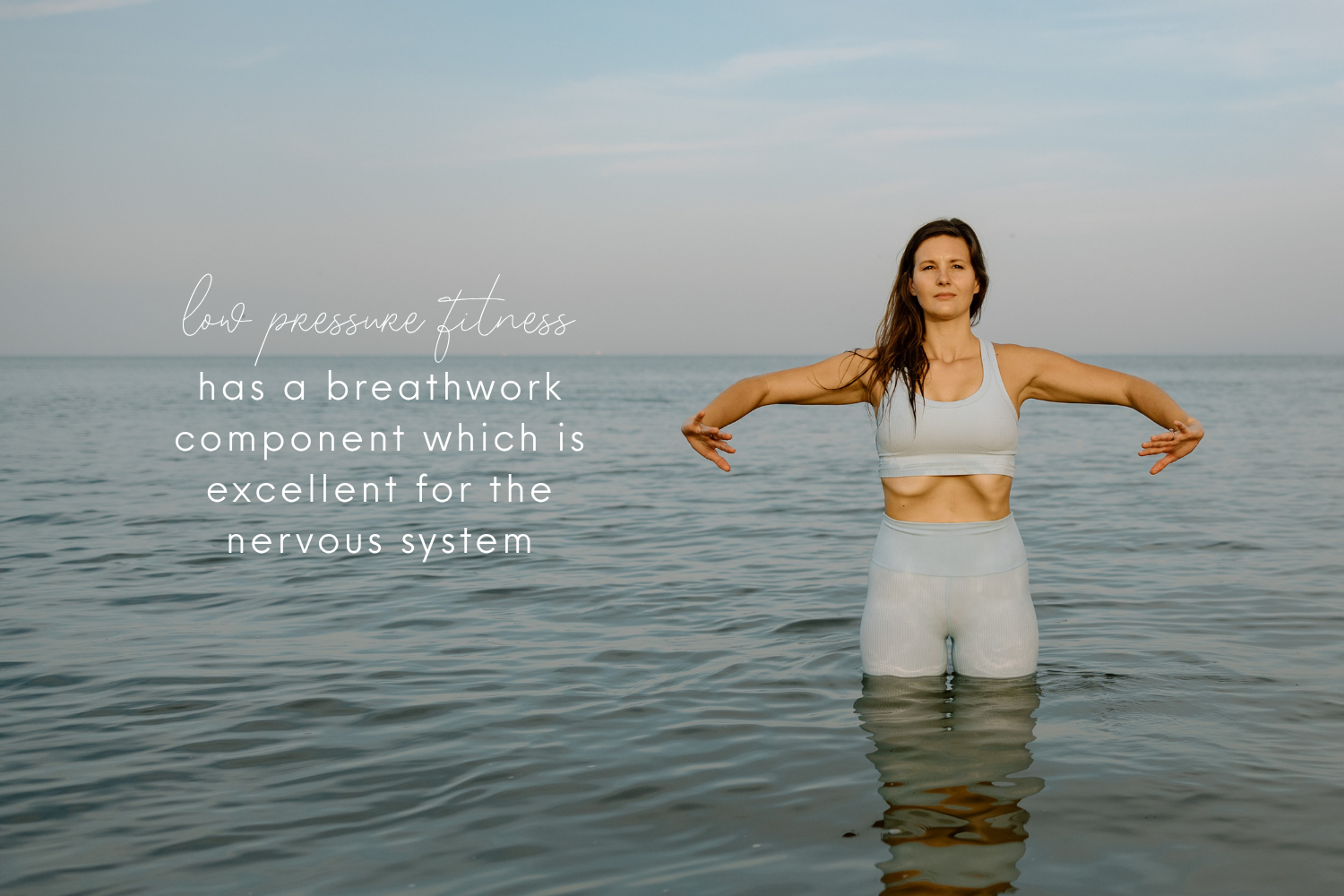
Low pressure fitness has a breathwork component that encourages full, diaphragmatically active breath. This deep breath pattern encourages parasympathetic (aka your rest and digest system) activation. The breathwork component makes it a perfect movement system for anyone who is currently recovering from stress, including those with autoimmune issues.
LOW PRESSURE FITNESS FOR HYPERMOBILITY
Low Pressure Fitness is gentle on the body's connective tissue system, making it a great option for people living with autoimmune disease.
Many autoimmune diseases (including my personal diagnosis of Sjogren’s Syndrome) influence the body's connective tissues. This can sometimes result in what is referred to as “hyper mobility” meaning that the body's connective tissue does not provide as much support during movement as the average person. Hypermobility often results in joint pain because the joints spend more time at the limits of their range. When this is the case, it becomes even more crucial that the muscles are able to support and control the movement within the joints.
For this reason, those with hypermobility are often encouraged to strength train. However, if not done properly, traditional strength exercises can easily result in injury for people with hypermobility.
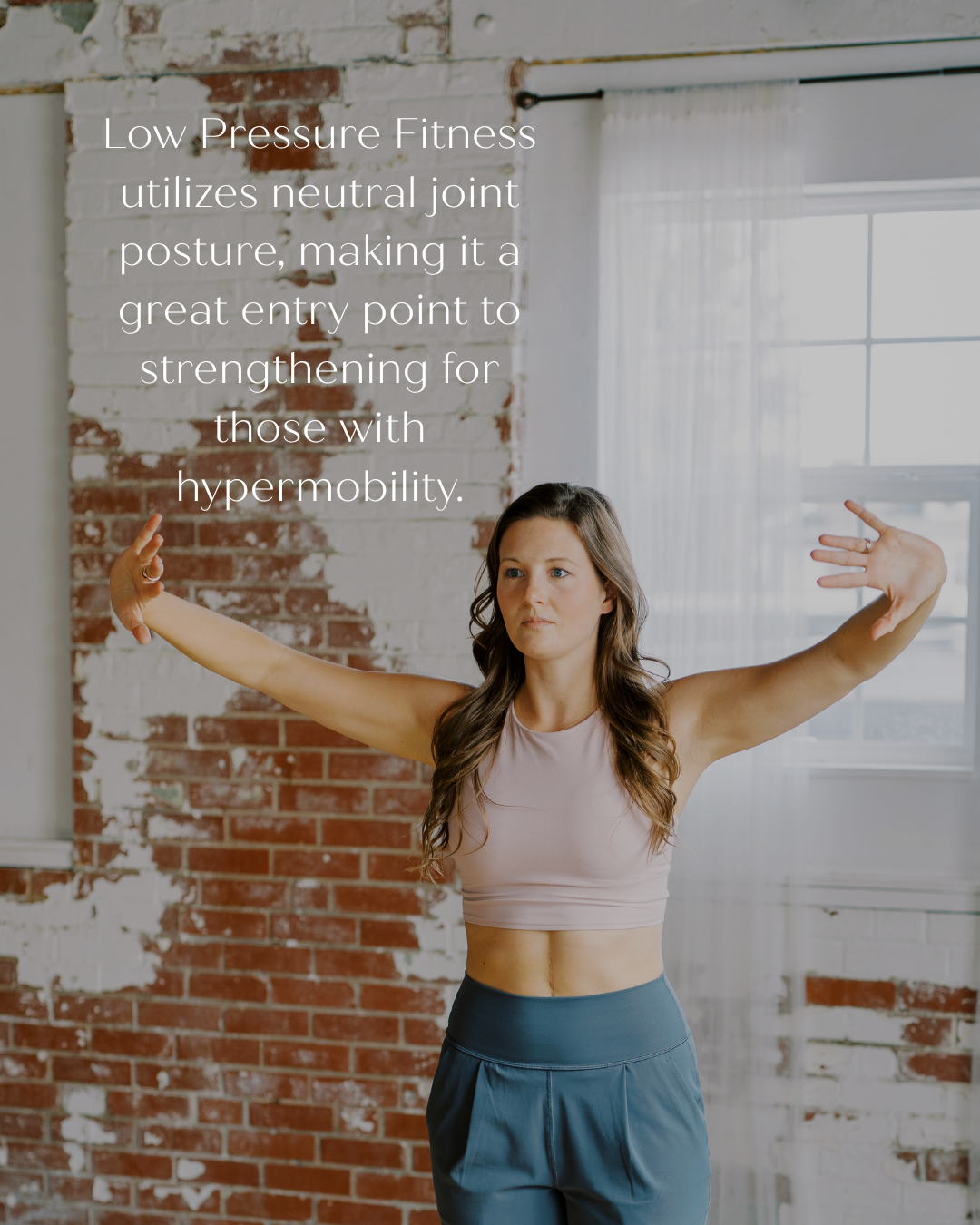
Traditional strength training involves moving resistance through a range of motion. It requires control of the remainder of the body, while the movement is performed at the target joint. However, those with hypermobility often experience movement at joints that are not necessarily the target joint, or have difficulty controlling the range of the target joint, both of which can result in pain.
I often view Low Pressure Fitness as a helpful stepping stone to traditional strength training for people with hypermobility. Low Pressure Fitness is performed with the joints in a neutral position, which allows you to build both basic postural strength and deep core strength in a position that is gentle on the joints. Low Pressure Fitness is excellent for basic postural strengthening. Often, people are able to begin other forms of strength training without injury after building this foundational strength.
If you struggle with hypermobility and past injury during strength training has left a sour taste in your mouth, I highly recommend beginning with Low Pressure Fitness.
HYPOPRESSIVE EXERCISE FOR GUT HEALTH
One of the contributing factors to autoimmune disease is intestinal permeability or “leaky gut”.
A factor that can contribute to gut dysfunction is decreased gut mobility (how your organs are able to move within your abdomen) and motility (how your organs move food throughout your system). I talk extensively about this in my post, Foundations of Gut Health. However, I believe that mobility and motility are often the most undertreated factors for those with gut issues.
You can undergo extensive protocols to address the intestinal lining and the microbiome, but if you do not address mobility and motility you are at significant risk for recurrence.
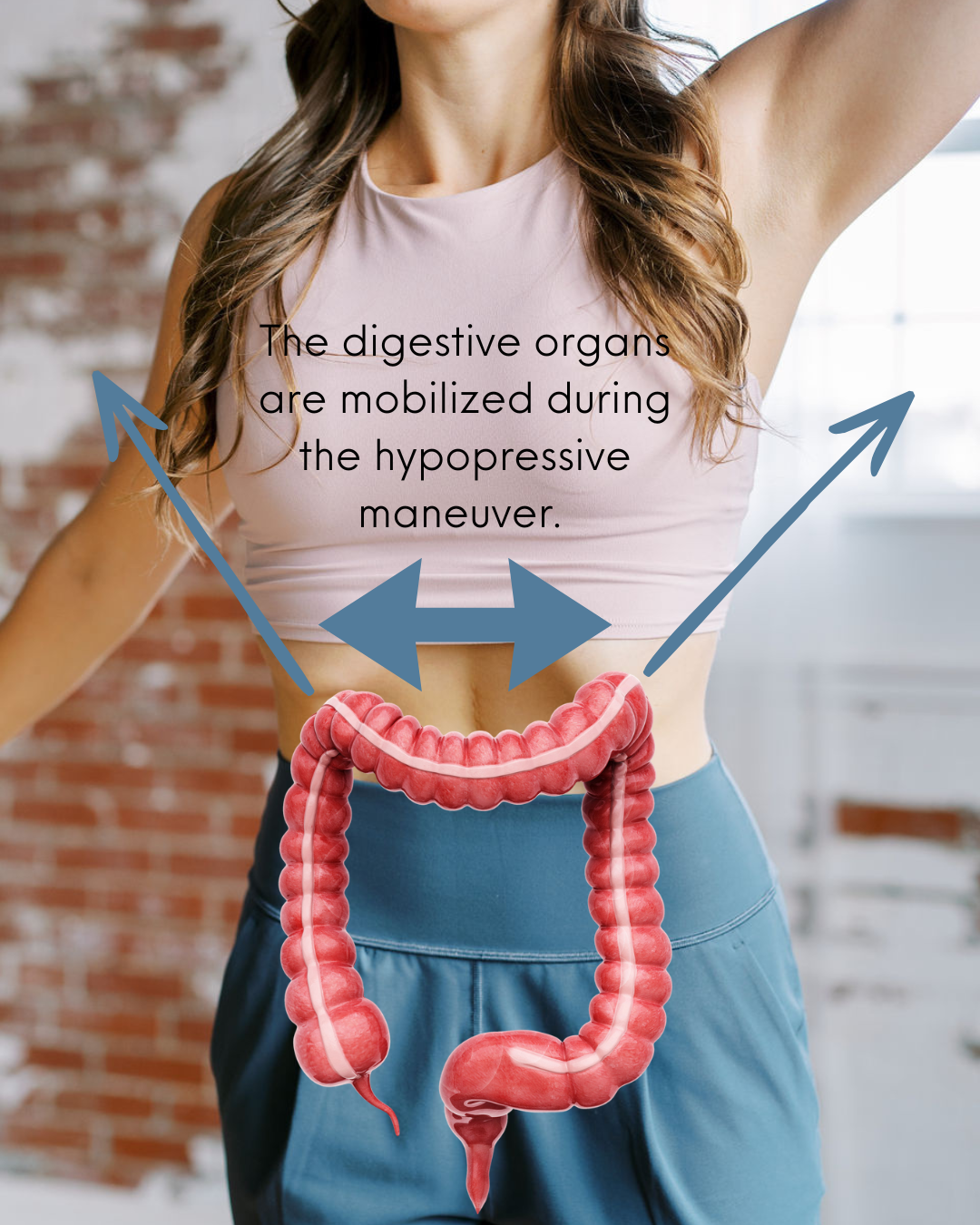
Hypopressive exercises can be beneficial for both mobility and motility in the gut. Your diaphragm has close connections to your large intestine and indirect connections to your small bowel. As you perform the hypopressive maneuver, it acts to gently mobilize your large intestine, encouraging motility in this area.
Additionally, the hypopressive maneuver provides a generalized lift for all of the organs within the abdominal and pelvic cavities. I often joke with my clients that it is like a facelift for your organs. However, on a more serious note, this lift can provide mobilization to any restriction that may be present in the abdominal cavity. This includes any scar tissue that may be present from abdominal or pelvic surgery, or from chronic inflammation.
Overall, if you are looking for exercise to help aid your gut health, hypopressive exercise can be an excellent tool.
GETTING STARTED WITH LOW PRESSURE FITNESS HYPOPRESSIVES
Healing from autoimmune disease can be challenging, but getting started with Low Pressure Fitness doesn't have to be. Here are some options that I have to help you get started.
HYPOPRESSIVE EXERCISE ONLINE CLASSES
I teach several live classes a week. I highly recommend that you start with an “Intro to LPF: Breath” class if you are able!
HYPOPRESSIVE ONLINE COURSES
If live classes simply are not in the cards for you during this season, I have 2 different online courses that contain everything that you need to implement Low Pressure Fitness hypopressive exercise.
Core Shift is my original course that walks you through the practice step by step. IGNITE is a 30 day challenge program. Honestly both courses are great and which one you choose is a matter of preference.
THE HYPOPRESSIVE PROJECT ONLINE MEMBERSHIP
If you would like access to everything including all courses and live classes, I highly recommend The Hypopressive Project All Access Membership. I created this membership to be the ultimate, accessible resource to help you get started and grow your hypopressive exercise practice. I would be honored if you would join me there!
I hope to see you in class soon.