HOW LOW PRESSURE FITNESS HYPOPRESSIVE EXERCISE HELPED PREPARE ME FOR PREGNANCY
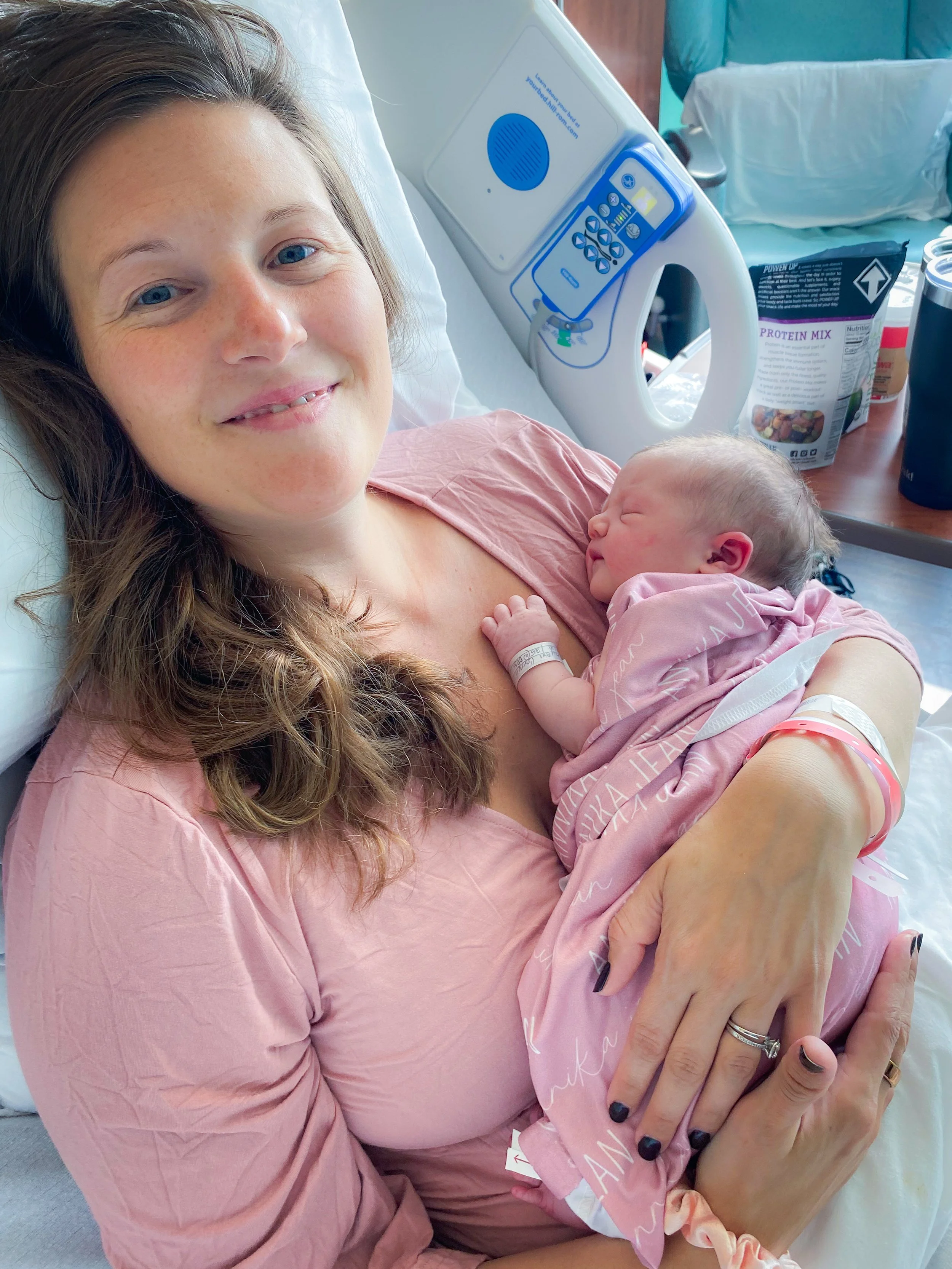
I gave birth to my daughter Annika in September of 2025.
Prior to this event, my personal experience in the pelvic health world was primarily with pain and prolapse. I had experienced immense personal benefit from Low Pressure Fitness for both of these things. Although I frequently helped clients throughout the pregnancy and postpartum periods, my personal experience in these areas was limited.
Low Pressure Fitness is also often recognized for its benefits postpartum. I saw these daily in my clinical practice.
It is not as often recognized for its benefits prior to and during pregnancy.
I had some pretty strong theories about just how helpful it could be during these time periods. Theories that were rooted both in the physiological understanding of how Low Pressure Fitness works AND from my clinical practice.
However, my sample size was small, my personal experience was none, and there was not strong evidence to support many of my theories. So I kept most of these thoughts to myself and my individual clients.
Being pregnant myself affirmed much of what I suspected. I now firmly believe that most women would benefit from learning Low Pressure Fitness prior to getting pregnant.
My argument is two fold:
-there is benefit to learning Low Pressure Fitness while trying to conceive
AND
- there is benefit to having practiced hypopressive exercise prior to pregnancy while being pregnant.
Benefits of Low Pressure Fitness While Trying to Conceive
Low Pressure Fitness: A tool to help you “just relax.”
Trying to conceive can be stressful, especially if you have been trying for a long time. It feels like the pressure builds with each cycle.
Unfortunately, stress can also wreak havoc on your hormones. Obviously not optimal for conception.
It sometimes can feel like a vicious cycle. One that both doctors and family members recognize but do offer tangible solutions for. Far too often women are told to “just relax”.
Eye roll. As if it is just a button you can press.
This situation leaves many women more stressed about being stressed and unsure how to go about relaxing.

Low Pressure Fitness is a tangible tool that can help your body relax.
Controlling your breath is the easiest, most effective way to activate your parasympathetic nervous system.
I find Low Pressure Fitness to be more approachable than pure mediation or other breath work practices. The reason? It also has a physical component that can keep your mind busy while allowing your breath to ease you into a parasympathetic state.
I am not claiming that Low Pressure Fitness can solve infertility, rather that it certainly doesn’t hurt to have a realistic tool to help you “just relax.”
Hypopressives to Optimize Uterus Position
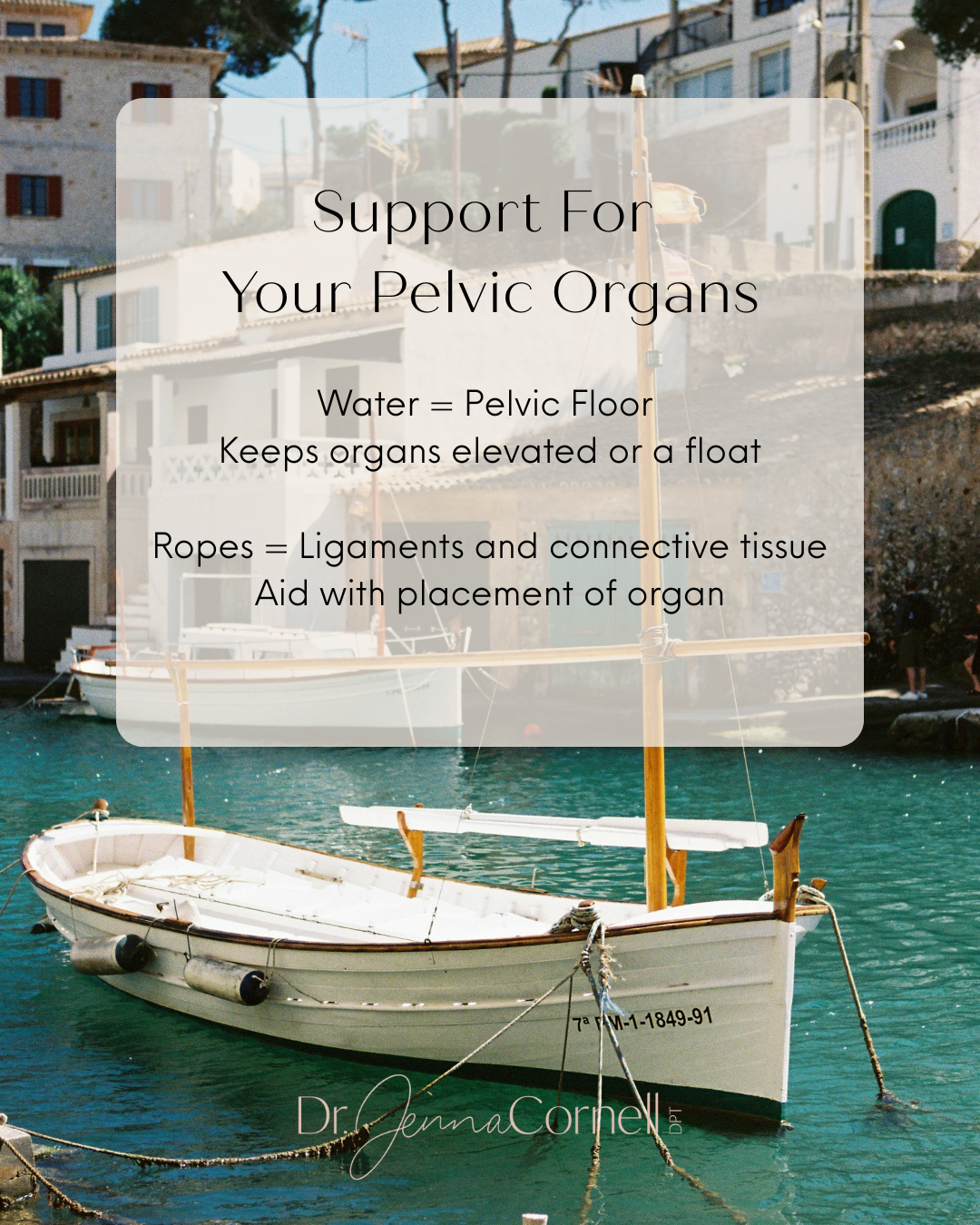
Your uterus is suspended in your pelvis by ligaments and supported by surrounding tissue.
An analogy often used to describe the positioning of your pelvic organs is a boat tied up in a boat slip. You can imagine two ropes on either side of the boat helping to keep the boat in place, these represent your pelvic ligaments and connective tissue. Your pelvic floor is the water in this analogy.
Now, imagine that on one side of the boat the ropes are all knotted. The boat would not be straight. It would be positioned sub-optimally.
In theory, something similar can happen with your uterus.
Low Pressure Fitness works to mobilize the fascia and connective tissue in your abdominal and pelvic cavity. As you perform the hypopressive maneuver, along with the intentional postures of Low Pressure Fitness, you are aligning the tissue in your pelvis. In theory, as this tissue becomes more aligned, it helps to optimize the position of the uterus.
There are some folks that claim that uterine positioning can affect fertility, and therefore propose that Low Pressure Fitness can improve fertility outcomes.
I have not seen any strong evidence of this claim in the literature. However, if you believe that uterine position does matter for fertility, then Low Pressure Fitness can certainly help.
Low Pressure Fitness is Easier to Learn Before Having Kids
I actually think this may be the strongest argument for learning Low Pressure Fitness while trying to conceive: You likely have more time prior to having kids.
Low Pressure Fitness is a wonderful way to support your core and pelvic floor postpartum. It can do wonders in 10-15 minutes a day after it is mastered. I personally have found it very doable with an infant at home.
However, it sometimes does take a bit of a time investment to master. Finding the time and mental bandwidth is often much easier when you are not adjusting to being a new parent.
I have joked that becoming a parent is learning an entirely new skill set. Truly, from breastfeeding (or just feeding) to changing a diaper. From knowing what to dress your baby in various temperatures to understanding that the noises they are making are normal. I could go on. There is a lot to learn and think about!
The last thing you need to learn is a completely new way to train your core. BUT so often, how you were training your core prior to pregnancy is no longer a helpful option. I have appreciated so much not having to learn a whole new way to train my core immediately postpartum. My body remembers, my abs were active throughout my entire pregnancy and immediately postpartum. I know I have Low Pressure Fitness to thank for that.
How Doing Low Pressure Fitness Paid Off in Pregnancy

Instagram somehow knew I was pregnant pretty much before I did. Throughout my pregnancy I saw dozens, if not hundreds, of reels that implied that discomfort during pregnancy was unavoidable. I did not have a particularly easy pregnancy, mostly due to heartburn and vomiting. However, there were some things that I believe I was able to avoid because I had practiced Low Pressure Fitness prior to becoming pregnant.
Low Pressure Fitness for Back Pain Prevention
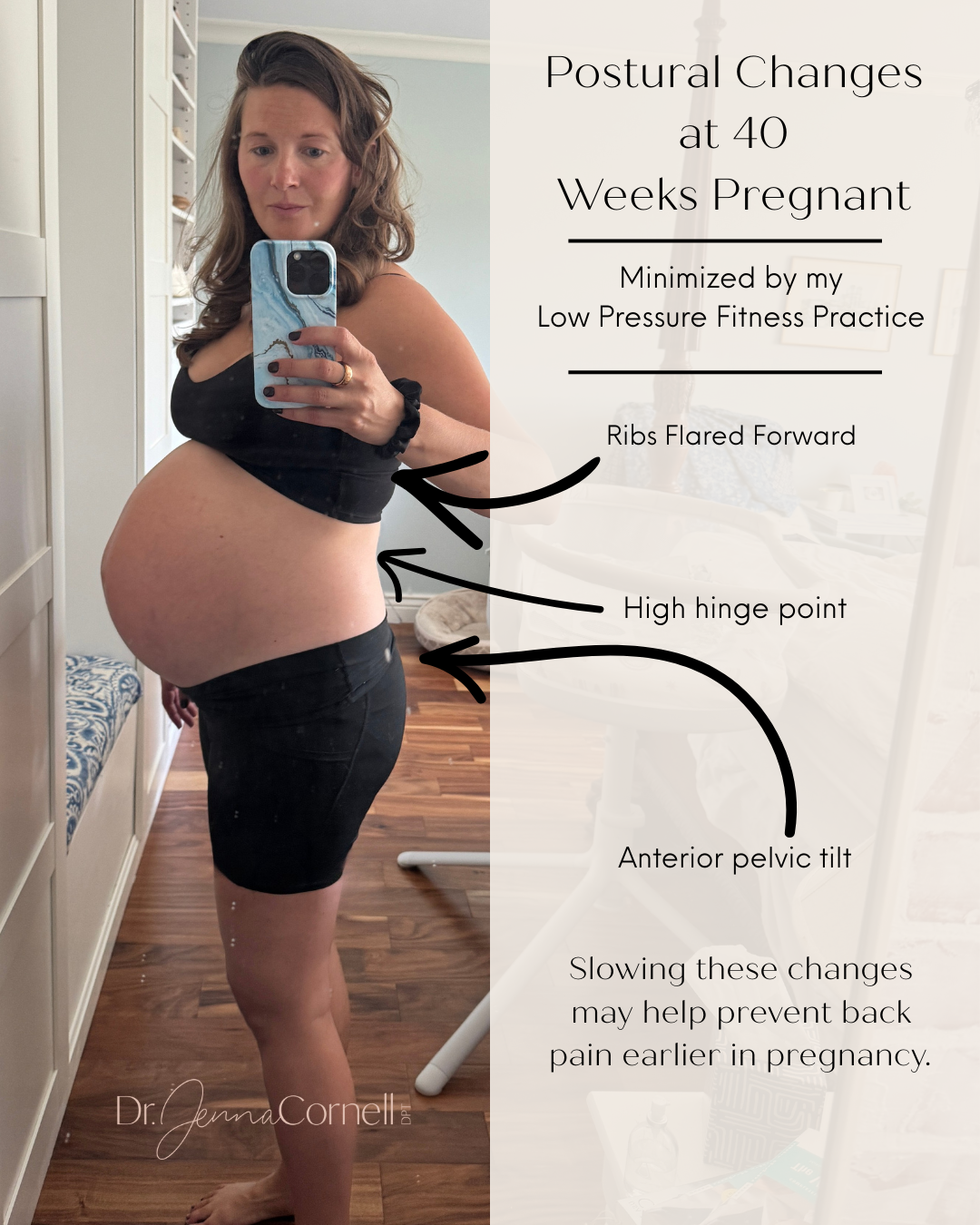
You will see many people say that postural changes in pregnancy are unavoidable. I believe that claim is a half truth.
Here is the full truth: Your body undergoes massive changes in the forces placed upon it during pregnancy. At a certain point, it will likely be unable to sustain its previous posture.
These changes often happen earlier rather than later for women who do not train their postural system and are often accompanied by discomfort in their low and mid backs.
Low Pressure Fitness is incredible at postural strengthening, even without the inclusion of the hypopressive maneuver. The postural part of the practice can be learned, continued and maintained throughout pregnancy.
I personally was able to move into my neutral posture and sustain it without pain up until about 39 weeks. This strength allowed me to work my physical job as a physical therapist until I had planned to stop. It also gave me the ability to continue teaching Low Pressure Fitness classes up until I gave birth. I thank my postural training with Low Pressure Fitness for my ability to function without pain throughout my pregnancy.
Breathe Easy During Pregnancy
The second half truth that I see perpetuated is that shortness of breath due to the baby pushing up on the diaphragm is unavoidable.
Again, there is some truth in this claim for late pregnancy. I will also admit that there is likely variation in this phenomenon due to torso proportions.
Be that as it may, I have witnessed in my clinical experience that many women have limited diaphragm mobility. I suspect that a large proportion of women who struggle with shortness of breath because the baby is “pushing on the diaphragm” didn’t have optimal diaphragm motion to begin with. Optimizing diaphragm range of motion prior to pregnancy can help reduce or delay this phenomenon.
I personally did not experience this problem during pregnancy. I was able to open my ribcage while breathing up to and during labor. Again, I credit Low Pressure Fitness for giving me excellent rib cage mobility prior to conceiving.
Peeing Yourself During Pregnancy is Optional with Low Pressure Fitness
As I mentioned earlier, I had my fair share of GI challenges during pregnancy. I threw up almost daily from 7-20 weeks, and several times a week after that up until delivery. Additionally, I was constantly congested. Blowing my nose and coughing was continuous due to both the congestion and reflux. My abdomen was CONSTANTLY having to deal with high pressure situations.
And yet, I had just one single episode of stress incontinence my entire pregnancy. I will tell you about this episode if you ask…. but I am not putting in a blog post :-)
Low Pressure Fitness works to sync your diaphragm and pelvic floor. This coordination allows your body to react to increased intraabdominal pressure without you thinking about it. So not only did I not pee myself, I also did not have to think about activating my pelvic floor to insure I stayed dry. I again credit Low Pressure Fitness for allowing me to make it through pregnancy (and postpartum) without leaking.
GETTING STARTED WITH LOW PRESSURE FITNESS HYPOPRESSIVE EXERCISE
I founded The Hypopressive Project with the goal of making Low Pressure Fitness known and accessible in the English Language. It is the resource I wish I had when I was learning this practice.
I offer two comprehensive courses to help you get started: Core Shift and IGNITE. I also offer several membership options.
It is never too late to get started with Low Pressure Fitness. However, if you are currently trying to conceive, or intend to in the next several years, it is the perfect time to start.
I hope to see you in class soon.